It’s another fermented fish sauce!

It’s amazing how often these ingredients come up in human cuisine. I have a couple of bottles of Asian fish sauces in my cupboard, it was a key element in Roman foods as garum, and what they all have in common is that they are made by taking large quantities of whole small fish and letting them ferment and liquefy into a spicy umami-rich sauce. Now I learn that Worcestershire sauce is also made by letting anchovies decay. I shouldn’t be surprised.

Although the story about how the original mixture that was made and tested is troubling. It tasted terrible, so they put the bottle away in the basement, and then years later, someone came along and decided to taste it again? When I find old leftovers I forgot in the refrigerator a few weeks before, I’m not tempted in the slightest. Maybe the problem is that I didn’t neglect them long enough, and I should let them a bit more tang, festering in the dark for a couple of years.

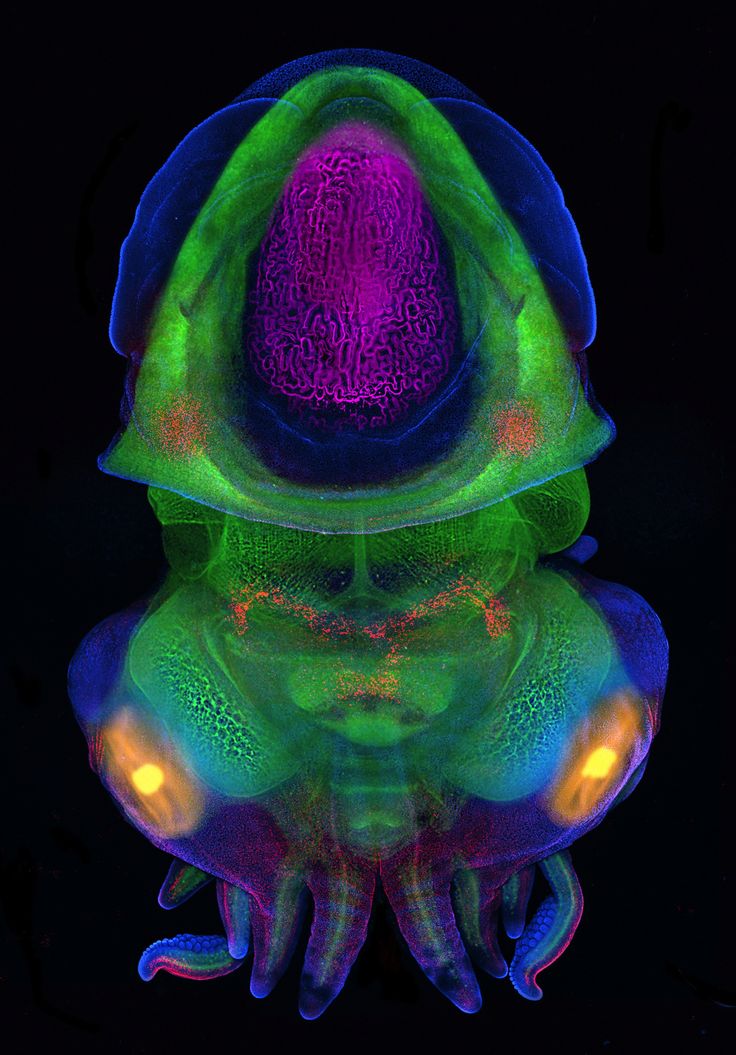
It’s Zebrafish Goldschläger!

Here’s a clever trick to thaw out frozen embryos: before you freeze them, you inject them with nanogold particles, and then you thaw them out by heating the scattered particles with a laser to prevent local formation of ice crystals.

(Before the cryogenics weirdos get all excited, this only works with transparent embryos, and requires the ability to microinject particles into all of the cells you want to protect.)

Orac’s on it

I’m just a cell and developmental biologist (whines faintly that cancer is a cell and developmental disease…), but Orac is a real, genuine, bona fide cancer doctor, and he agrees with me that Paul Davies’ atavism theory of cancer is full of crap. He leads you through Robert Weinberg’s authoritative papers on known causes of cancer to show that the idea that cancers are regressions to an ancestral state is nonsense.

I’ll add that I’ve taught a couple of classes on cancer biology and have gone over Weinberg’s The Biology of Cancer, and there’s a lot of developmental biology in there — every time he writes about transcription factors or signaling molecules, it’s all old familiar stuff from fish and fly development. When I see someone like Davies making analogies to evolution, though, I get a sense of deja vu. Once upon a time, people like Haeckel and other natural philosophers looked at how markers (in their case, morphological markers rather than molecules) changed during development and got all excited and claimed that they were recapitulating their evolutionary history. It took someone like Karl Ernst von Baer to come along and say, “You daft wankers, they’re repeating embryological patterns; this is what you see as you develop from the general form to the specific.”

It’s the same story here. Cancer is recycling genes and pathways that are retained because they’re developmentally significant, not because they’re a relic from greatgreatgreatgreat grandma, carefully preserved inside a secret nook in the genome in case we needed to re-adopt a single-celled lifestyle.

I’m not convinced that New Scientist gets it yet

Finally, they’ve come right out and said what we knew all along: most of our DNA has to be junk. I guess that’s progress, but they’re not doing a good job of explaining it.

After 20 years of biologists arguing that most of the human genome must have some kind of function, the study calculated that in fact the vast majority of our DNA has to be useless. It came to this conclusion by calculating that, because of the way evolution works, we’d each have to have a million children, and almost all of them would need to die, if most of our DNA had a purpose.

None of the biologists I know have been arguing for ubiquitous functionality, but I know they’re out there, so that’s kind of a strange opening: it’s as if the only way they know how to frame the story is as some kind of real conflict (see also every NS article about evolution vs. creationism). I don’t know where the 20 year timing comes from, either. JBS Haldane died 53 years ago, and he worked out this argument long before his death.

But worst of all, they just plop out this claim that we’d “each have to have a million children, and almost all of them would need to die, if most of our DNA had a purpose”. OK. Reading this as a naive layman, WHY? They present the conclusion with none of the evidence or logic behind it; there is no explanation here. The key part of the story that Dan Graur explained is that we know the mutation rate of human genes, and we can calculate the cost to the population of carrying around suboptimal genes, and we can estimate how many children you’d have to have to compensate for that load of mutations, and the load is going to depend on how many genes are present. It’s easy to put an upper bound on the number of genes we have, given our mutation rate and how many children an individual can have (hint: there’s no way you can have a million kids.)

The logic is clear and convincing, but you have to present it if you’re trying to communicate the science.

I feel like I’m grading an exam. Yes, you got the correct answer, but I’m not convinced that you understand how you arrived at it, and aren’t just regurgitating something you memorized.

Will no one think of the eels?

Tragic. A truck full of hagfish overturned in Oregon, and all anyone is wondering about is the car repair and the dry-cleaning bills. What about the poor wonderful dead beasties?

The best succinct summary of the wondrous hagfish is at Southern Fried Science.

Bees!

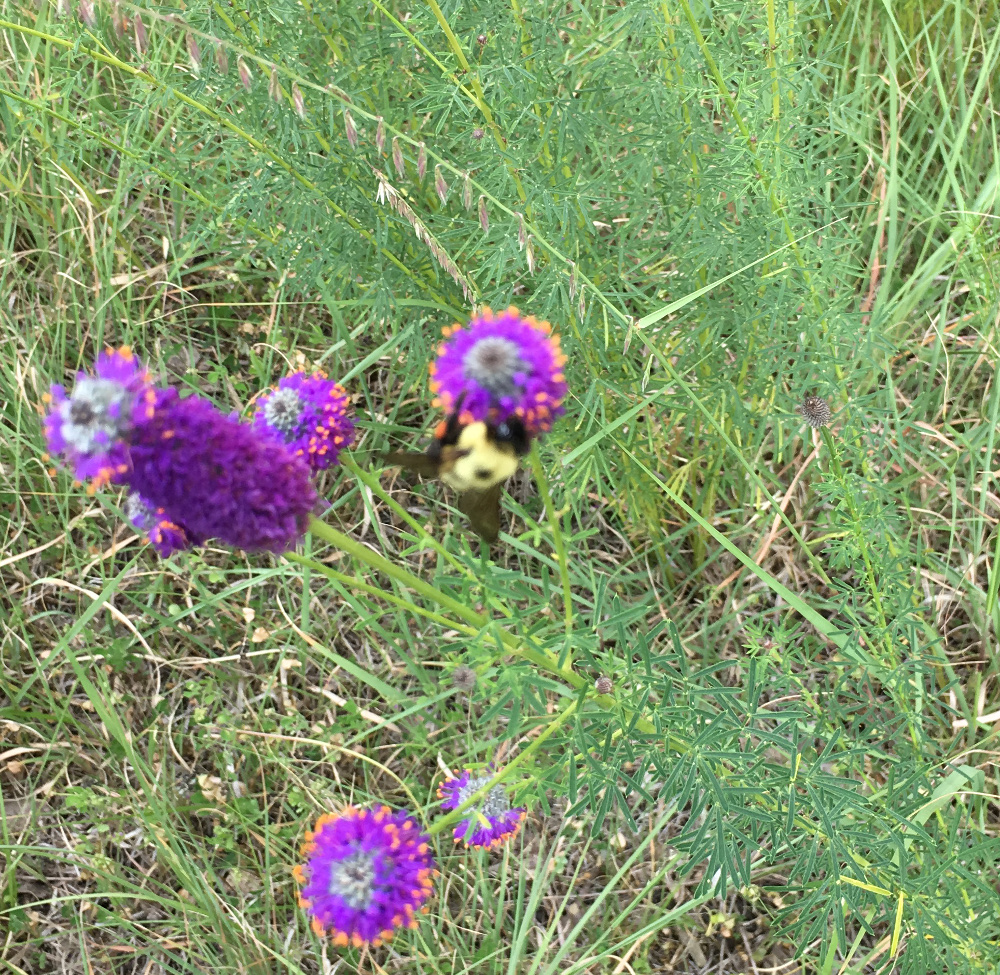
It’s sad that this has become a notable observation, but they’ve become so scarce that when I walked by the science building, which is surrounded by prairie grasses and flowers, I was surprised to see swarms of bumblebees everywhere. I had to take a picture.

I know it’s a bit blurry, but just think of it as like a photo of bigfoot or the Loch Ness monster — those are always out of focus, so I’m adding verisimilitude. Otherwise, when I’m dandling a grandchild on my knee 50 years from now, showing them this strange extinct insect on a strange extinct flower, they won’t believe me.