The Probability Broach, chapter 16
Win and his friends are trying to alert the North American Confederacy to the Hamiltonian threat in their midst. Conveniently, one of said friends is Jenny Smythe, the president of the NAC.
The NAC has a Congress, but it doesn’t meet regularly—only when all the members feel like it. So, she heads out to spread the word:
As Jenny flitted about the continent persuading balky Congresspersons into their first parley in three decades, Lucy acted as anchor, relaying messages, confirming “crazy” stories, arranging tickets and travel schedules.
So what did Lieutenant Bear do to make himself feel useful? Zilch. Well, I had some minor value as Exhibit A: the Barbarian from the Land of the Bomb. Wonderful.
With no part to play, Win feels bored and useless. He’s moping around the house, drinking and feeling sorry for himself. (Once again, no one seems to care that he’s unemployed, nor hints that he needs to make a financial contribution.)
Lucy notices his funk and and tries to cheer him up (“Winnie, you look like the Before model in a cocaine commercial”).
She laughed suddenly. “Tell me, boy, you planning to stick around? I mean after Deejay’s thingamajig’s back in working order?”
That caught me by surprise. “Haven’t thought about it much.” I’d been thinking about very little else. “I guess I just assumed—”
“All you talk about’s ‘back-home-this’ and ‘back-home-that’—what in lumbago’s a girl gonna assume?”
“I just never imagined—besides, I have obligations back home.”
… “Who says you’re obligated to attend the funeral of your own civilization or get buried with it?”
This is an entirely unwarranted show of confidence on Lucy’s part, considering they know for a fact that Madison is preparing to bring in an invading army equipped with atomic bombs, and there’s nothing they can do to stop him because his private property rights are sacrosanct.
Given that the North American Confederacy is facing a threat of nuclear holocaust, isn’t it a little premature to be discussing Win’s plans for the future? What makes Lucy so sure they’re going to win, or that the world won’t be left a radioactive wasteland even if they do? Shouldn’t they at least acknowledge the possibility that Win’s world might end up being the safer place to seek refuge?
They’re still contemplating this when Ed bursts in. He’s been reviewing the footage they took from Madison’s house, including the room where the villains are building their own Probability Broach, and he’s belatedly made a connection.
As you may remember, before Win showed up, Ed was investigating a theft from a company called Paratronics, which makes parts that are essential for building interdimensional portals. It turns out the machinery they saw in Madison’s house was built from those stolen parts. Ed is furious at himself for not figuring this out earlier:
“Anyway, that basement’s got every dial and gauge, every coil, transistor, and interociter that’s missing from Bertram’s warehouse, that’s what!”
…I had an idea. “Now we can take Madison to court… He can’t plead ignorance with a basement full of stolen parts!”
“Sorry,” Lucy said, “That information was obtained unethic—”
“But I thought that could be taken care of! Don’t keep changing the rules!”
Yet again, the ethics of this society interfere with our heroes seeking justice. But this is an especially puzzling obstacle for Smith to lay in the path of his protagonists.
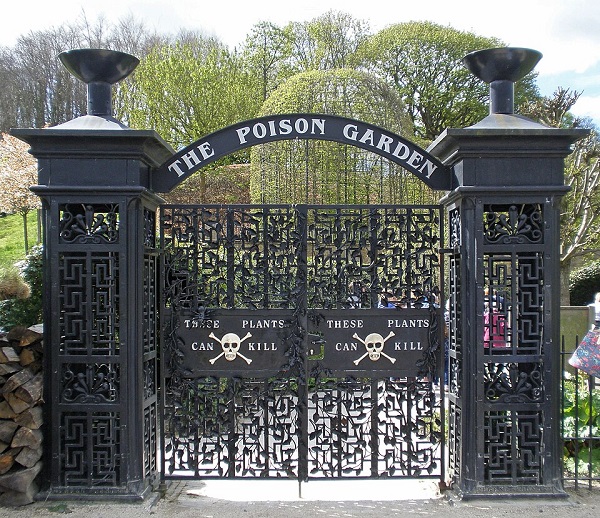
He’s referring to a legal doctrine called “fruit of the poisonous tree”. It says that prosecutors can’t use evidence against you at trial if they broke the law to get it. It’s supposed to be the incentive for police to apply for search warrants, rather than breaking into your house whenever they feel like it to rummage around for evidence of a crime.
But, again, there are no search warrants here, because there are no laws here. Ed and Win aren’t public servants who are sworn to uphold established precedents; they’re private parties who don’t answer to anyone. Are there really codes of ethics that prevent them from using evidence acquired through shady methods? If so, who enforces them? Are these codes so universally agreed upon that they couldn’t bring a case with any hope of success?
(Also, an obvious point: Why do Ed and Win have to say where they obtained the footage of Madison’s house? Why not just say it came from an anonymous tipster?)
It’s hard to imagine how any crime could be solved in this world, if all you have to do is keep stolen goods in your house. No one can enter without your permission, and even if someone did, they wouldn’t be able to use anything they discovered against you. Also, as we saw previously, no one knows about fingerprints, and there are no ID documents or other means of identifying a stranger if you don’t know them on sight. What on earth is left for a private investigator like Ed to do?
But even discounting that obstacle, Ed says there’s a bigger problem:
“Oh, if we retrieved Bertram’s property, it’d delay Madison, but he’d acquire what he needs eventually, and we’d be right back where we are now. But what really makes me mad is that, in order to sue, you need a victim, a complainant. Once I’d done the analysis, I called Bertram.”
“And?” I said, not liking where this was headed.
“And he was very upset. I found out why later on—he’d flown the coop. Forsyth’s team watched Madison greet him at the door, and they weren’t exactly acting like enemies.”
“So Bertram’s been stealing from his own company,” I said. “For the Cause, no doubt.”
This is a classic needlessly complicated villain plan.
Ed has discovered that Freeman K. Bertram, the Paratronics CEO, and Madison, the would-be world conqueror, are in cahoots. But rather than just sell Madison the parts to build his own Probability Broach, Bertram schemes with Madison to steal them, and then… hires Ed to solve the crime he masterminded?
Why bother with this? Bertram has no reason for this subterfuge—he’s in charge of the company! He can sell to whoever he wants! In this anarcho-capitalist world, you can be sure there’s no law preventing him from doing so. If he wanted to be really devious, he could do it through a chain of shell companies, so no one can trace the purchases, or arrange some kind of kickback scheme, to reimburse Madison for the cost.
But instead of using the legitimate methods available to him, he schemes to commit this completely unnecessary crime. That ends up being the only thing that puts the heroes on his trail.
Image credit: Amanda Slater, released under CC BY-SA 2.0 license

New reviews of The Probability Broach will go up every Friday on my Patreon page. Sign up to see new posts early and other bonus stuff!
Other posts in this series:
You know, Win’s friends letting him freeload for a while and not forcing him to contribute or get out may not make sense in an anarchocapitalist world, but it does make sense according to human nature. Win is their friend, after all. Friends don’t throw friends out onto the street. That is, they can’t act in their nature without compromising their values because ancappery goes against human nature. Since it’s just capitalism with no restraints, therefore capitalism itself goes against human nature, since it is in human nature to care for the welfare of others. Assuming Smith was serious about the stateless society thing, then even he, when imagining human interactions, assumes that there isn’t really capitalism here because subconsciously he knew that capitalism is bad.
I’m also surprised you didn’t draw attention to Lucy saying that cocaine is freely advertised in this world, presumably in very misleading ads that say not the negative effects. So caveat emptor is a universal rule, meaning consumers have no protection against scams, which undermines the trust needed for society to function horizontally. Once again, if Smith had been serious about the “anarcho-“ part of his philosophy, he’d have to reject the “capitalist” part.
The whole issue with how evidence is collected if fairly absurd. It might be harder to convince a judge or jury in situations where you could easily have planted the evidence but obviously nothing should be excluded as a matter of law in a world where those laws don’t exist.
I expect explaining how they got the evidence would come up as a matter of establishing the credibility of the evidence. Something Win and Ed took personally and can swear in court is the raw footage has more credibility then some mysterious film that arrived in the mail from an unknown source. Either way they should be able to present it in court.
The twist with Bertram is not only needless complexity it’s also Treacherous Quest Giver. Bertram had no reason for the whole theft routine but even less reason to hire a detective to investigate it. It’s a setup for a comedy about an incompetent detective hired on the expectation they would fail.
Also, it’s not like this is an unforeseen obstacle. This was supposed to be the plan all along: break into Madison’s house, find proof of his wrongdoing to expose him with, and if he sues for burglary, they countersue for attempted world domination. But now that they’ve got the proof, it’s suddenly unethical to use it.
I think Smith just didn’t want to solve the problem through the legal system, even his own anarchist legal system. Given his gun-loving politics, he was always going to write the book so it has to end with a shootout and explosions.
You could cobble together a justification* for Bertram’s actions – but it’s annoying that Smith puts that burden on the reader.
*Madison is hugely unpopular, so openly selling to him might result in trouble (the dolphin scientist, who is pretty doctrinaire about his libertarianism might quit), and not hiring a detective after being burglarized is suspicious, too, so he hires Ed to cover his tracks. Now that the plan is almost complete, there’s no more need for secrecy.
Couldn’t he just secretly sell it to him then?