The Probability Broach, chapter 16
We previously read that, while Ed and Win were burgling John Jay Madison’s house to get evidence of his evil plan, he returned the favor by sending his thugs after their friend Clarissa Olson. In this week’s installment, Clarissa explains what happened:
“I’d stayed late with a client who’s having a rough regeneration—geriotic complications to be cleared up before the limb can replace itself… Anyway, I went home and freshened up, intending to come over here and see what mischief these two had accomplished at Madison’s. Just as I was starting out the front door, a couple of huge men smashed it in. I ran back through the house, but someone was there with a machine gun, shattering my windows.”
“How many were there?”
… “Two in the front, and the one out by the pool, with the hideous scars—I turned around again and practically ran into them. I had my Webley out, and sort of waved it around with the trigger held back.”
Lucy chuckled. “Walked right into it, the jerks.” She held one of the wicked little projectiles, eleven caliber, an inch or so long. “A thousand of these a minute, ten thousand feet a second. It’d ruin your whole day, wouldn’t it?” I examined the pistol with considerably more respect. Its barrel was a single massive coil, driving little steel needles by linear induction. There were hundreds in its magazine.
In case you’ve forgotten, Clarissa is the doctor who operated on Win and saved his life when he was gunned down and almost killed. She never asks him to pay for this, which is arguably in keeping with medical ethics, although it’s puzzling in an anarcho-capitalist world where money and profit is supposed to rule everything.
But in this chapter, we see a different side of her. She’s a healer who saves lives, but she’s also a stone-cold killer who wields a deadly flechette gun (sci-fi sometimes calls this kind of weapon a “needler”), and shoots men dead without a qualm.
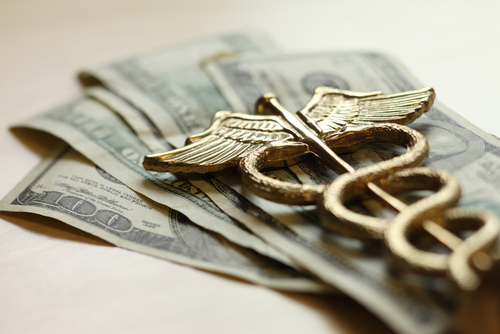
Obviously, this is an indulgence of authorial fantasy on L. Neil Smith’s part: the sexy blonde doctor who’s also a badass gunslinger. But what about the ethics of this? Isn’t there an inherent contradiction in the idea of a healer who goes armed to kill?
The Hippocratic Oath is famous for its clause to “do no harm“. That vow is echoed in modern medical oaths, like the Declaration of Geneva, in which doctors swear to “maintain the utmost respect for human life”.
This even applies to military medics, who, according to the Geneva Conventions, are supposed to be noncombatants. They have a moral duty to render aid to anyone in need, including wounded soldiers from the other side.
Doctors aren’t forbidden to defend themselves if they’re in danger, of course. But you’d think a good doctor would be at least a little conflicted about having to shoot two people dead. That ethical conflict is never alluded to or explored in this book.
This raises a related question: Are there pacifists in the North American Confederacy? Is it possible to exist in this society while abstaining from violence—or are such people easy pickings for the first thug who knows they won’t defend themselves? This is another of those questions that a gun fetishist like Smith never considers.
Clarissa explains that she got away unscathed, but her home was destroyed:
“I stepped over the bodies, ran out front, and drove away. There was a blinding flash in my rear viewscreen and a huge ball of fire”—she shook her head sadly—”pointless destruction for its own sake. They’ll pour me a new house, and my professional records are transmitted every day to the insurance company, but my furniture, clothes—everything is gone.”
Lucy invites Clarissa to stay with her in the meantime, while Ed gives orders to increase their private guard (yet again). Win, still outraged, says: “Madison couldn’t get to us, so he decided to pick on you, probably as a threat to hold over our heads. As far as I’m concerned, it would have worked, too.”
He’s still fuming that they can’t just round up some goons and go repay Madison in kind, but his friends again tell him that that’s not the way it works here. However, Lucy says she has another idea. She has a connection that’s about to pay off:
“Ladies and gentlemen…” Lucy announced from the hallway, “The President of the North American Confederacy!”
The president entered, pausing a moment to commiserate with Forsyth, expressing pleasure at meeting Deejay, nodding grimly over the news while being introduced to Clarissa, greeting Ed like an old friend. Under the peculiar circumstances, I had to be introduced to the president, too. But no one had to introduce her to me.
I know Jenny Noble when I see her.
This is the NAC’s alternate version of Jenny Noble, the libertarian activist Win met in his own world (although her name is Jenny Smythe here, for avoidance of confusion).
In this world, she’s the president of the North American Confederacy. The NAC has a president and a legislature, although they’re symbolic figures with no real authority or power, as you’d expect in an anarchy. However, she’s apprised of the situation and she says she can help:
“I’ve been trying to tell you that, with any luck, the Confederacy’s going to pay for everything!”
Lucy narrowed suspicious eyes. “How y’figure that, girl?” I was interested, too, since there didn’t seem to be enough government on the whole planet to buy Forsyth a box of ammunition.
Jenny laughed. “It’s really very simple. In a week or so, there’ll be people standing in line to contribute. You see, I’ve decided there’s only one way to deal with the Hamiltonians. I’m calling a session of the Continental Congress.”
Is this anarcho-capitalist Congress going to show an unprecedented burst of community spirit? Will they come together to save the day through collective action?
Here’s a hint: Take your best guess about what would happen in real life when a bunch of selfish individualists assemble to argue about which one of them should deal with a threat. That’s pretty much how it plays out in this book.
New reviews of The Probability Broach will go up every Friday on my Patreon page. Sign up to see new posts early and other bonus stuff!
Other posts in this series:
But you’d think a good doctor would be at least a little conflicted about having to shoot two people dead. That ethical conflict is never alluded to or explored in this book.
That’s really not at all unbelievable. “Do no harm” means don’t administer medical treatment that harms a patient. Defending oneself against armed attackers is not a medical treatment.
No, what’s REALLY unbelievable is this bit:
“Two in the front, and the one out by the pool, with the hideous scars—I turned around again and practically ran into them. I had my Webley out, and sort of waved it around with the trigger held back.”
So she was outnumbered by goons who already had their guns out, AND one of whom had kind of caught her by surprise (“practically ran into them”); but she still managed to blast away at them and get away unharmed? How do a gang of hardened career criminals suddenly lose their ability to shoot a known target at close range after surrounding her house?
“…You see, I’ve decided there’s only one way to deal with the Hamiltonians. I’m calling a session of the Continental Congress.”
The same Continental Congress who, in the real world, couldn’t even get the States to cough up enough cash to pay the veterans of their own War of Independence? Are you gonna wind up this review by confessing this book was satire all along? ‘Cuz that’s where we’re heading with every chapter.
Oh, and…
They’ll pour me a new house…
Who’s “they” here? Her insurance company? In our ‘verse, insurance companies generally don’t pay for damages done by war. And what does she mean by “pour?” Are houses made of some materials that can be poured into a mold, or 3D-printed? Whatever you’d “pour” into the shape of a house would almost surely be bigger than the house itself; so what’s that mold made of? Might it be cheaper to build houses out of that material instead?
…and my professional records are transmitted every day to the insurance company…
Why? Is “The Cloud” completely privatized and owned by insurance companies who become default managers of “professional records” that really aren’t any of their business? This is going from weird to silly.
I suppose, just as an insurance company in our world might give you a discount if you install smoke detectors, which reduces the chance that they will have to make a payout, a company that insures data against loss might give a discount to someone who transmitted all their data daily to the insurance company’s servers.
Pohl and Del Rey wrote a full-fledged satire in which insurance companies essentially took over the world – everyone got food, shelter and medicine from insurance companies that were insuring against hunger, exposure and ill health (https://www.andyjohnson.xyz/home/moral-hazard-preferred-risk-1955-by-frederik-pohl-and-lester-del-rey-review).
Can’t wait until the Congress chapter, where we learn that Lucy, in spite of her protests, really seems to enjoy politicking.
At least things like Clarissa taking down a pack of armed killers are in the range of “stupid things that happen in action-adventure stories” rather than “stupid worldbuilding.”
Then again, I can’t see why the Confederacy even tolerates a national government, even a symbolic one.
P.S. I think the next chapter is the one with a surprisingly topical moment.