We live, under the dead hand of Ed Brayton

Freethoughtblogs was first born out of conversations between myself and Ed Brayton in 2010-2011, when we were maximally disgusted with the direction the atheist movement was taking. So we set up our own little domain and tried to recruit fellow humanist/secular writers to fill up our pages. That was mostly successful, with a few setbacks now and then.

Then in 2020, Ed, who was suffering with a chronic illness, checked himself into a hospice and died, peacefully. He passed along all the logistical info for the website to me, we thought, so I had the account and password for our domain host, Bluehost. We kept cruising along.

Then Bluehost made a security enhancement: when I logged in, they would send a verification code to Ed, to make sure nothing underhanded was going on. Ed did not reply, for obvious reasons. So we can’t actually change anything about the domain, which again, was OK. We didn’t need to.

But then, Bluehost needed us to pay for their services. They sent notifications and bills to poor dear Ed, who didn’t care, and didn’t contact me in my dreams or anything, so those bills were unpaid. Ooops. Two weeks ago, they pulled the plug on freethoughtblogs.com. And no doubt sent an informative announcement to Ed, who didn’t notice.

So for the last two weeks, I’ve been shouting down phone lines and internet cables with the simple information that “ED IS DEAD, PLEASE UPDATE THE CONTACT INFORMATION AND FIX THE SITE”, and they would send me all these long legal forms that I would fill out with all the information that I had and send it back to them, and they would ignore me, and the next day I’d get into a conversation with a chatbot who would obliviously send me the same requests all over again.

Then this morning, a breakthrough. I didn’t try to update the information at all. I didn’t explain that Ed was dead. I just said, “I understand our bill is past due, here is my credit card number, can I please pay everything off?” and they said “Yes, we would be delighted to take your money” and they did, and they pushed a button, and our service is restored.

The only drawback is that freethoughtblogs is a company that is still officially owned by a ghost. No one cares as long as we the living pay the bills.

I paid up for five years in advance, so remind me in 2031 that I, or someone, needs to generously cough up a few bucks in Ed’s name.

For now, we can resume slapping words on a wall.
No ghosts in the brain

The Washington Post ran an article with the provocative title, “These Patients Saw What Comes After Death. Should We Believe Them? Researchers have developed a model to explain the science of near-death experiences. Others have challenged it.” It’s obviously empty fluff, garbage of the kind that gets pumped out all the time to appeal to the gullible yokels in their readership. I’m not one of them. I also refuse to read the WaPo anymore (rot in hell, Jeff Bezos), but then, fortunately or unfortunately, the same article has appeared on Beliefnet, sans paywall. Now everyone can see how insipid the ‘evidence’ for life after death is. This article should present some evidence. It doesn’t. It’s the usual anecdotal silliness.

Here’s their big example.

After she dropped to her knees outside her home in Midlothian, Virginia, suffocating, after she was lifted into the ambulance and told herself, “I can’t die this way,” and after emergency workers at the hospital cut the clothes off her to assess her breathing, Miasha Gilliam-El, a 37-year-old nurse and mother of six, blacked out.

What happened next has happened to thousands who’ve returned from the precipice of death with stories of strange visions and journeys that challenge what we know of science. Last year, a team of researchers from Belgium, the United States and Denmark launched an ambitious effort to explain these experiences on a neurobiological level — work that is now being contested by a pair of researchers in Virginia.

At stake are questions almost as old as humanity, concerning the possibility of an afterlife and the nature of scientific evidence — questions likely to take center stage at a conference of brain experts in Porto, Portugal, in April.

“The next thing I knew, I was out of my body, above myself, looking at them work on me, doing chest compressions,” Gilliam-El said, recalling Feb. 27, 2012, the day she suffered a rare condition called peripartum cardiomyopathy. For reasons that aren’t fully understood, between the last month of pregnancy and five months after childbirth, a woman’s cardiac muscle weakens and enlarges, creating a risk of heart failure.

Gilliam-El, who had given birth just three days earlier, recalled watching a doctor try to snake a tube down her throat to open an airway. She remembered staring at the machine showing the electrical activity in her heart and seeing herself flatline. Her breathing stopped.

“And then it was kind of like I was transitioned to another place. I was kind of sucked back into a tunnel,” she said. “It is so peaceful in this tunnel. And I’m just walking and I’m holding someone’s hand. And all I’m hearing is the scripture, ‘Yea, though I walk through the valley of the shadow of death …’”

Please, please learn about the concept of confabulation. If you black out, when you resume consciousness, your brain quickly invents stories to fill the gap. They aren’t necessarily accurate. A trained nurse is going to be familiar with happens to patients who lose consciousness, and could overlay that on the period when she was actually non-functional. She’s also pre-loaded with religious mythology, and that gets stuffed into the constructed memory. It’s not evidence of anything.

I have a recent personal experience that applies. I too blacked out after a fall; I remember the pain of bouncing my skull off the sidewalk, and then the next thing was becoming aware that I was sitting in my office at work. I remember nothing of what happened between those moments.

But I quickly made assumptions. I must have (scenario A) got up, dusted myself off, and walked to work by force of habit. Or (scenario B) a pedestrian must have helped me up and sent me on my way, or (scenario C) a passing motorist pulled over and gave me a lift to the building, or (scenario D) an angel swooped down, clutched me to her soft downy bosom, and transported me to my office chair before giving me a revitalizing swig from the cask of whisky she carried in a cask on her collar. Do I have any evidence for A) my indomitable will, B) a pedestrian, C) a motorist, or D) an angel? No I do not. Some might be more likely than others, but I can’t claim I have any verifiable evidence for any of them.

Likewise, Gilliam-El knows she passed out in an ambulance — and we can find evidence for that — and that she regained consciousness in a hospital some time later — also based on evidence. But all the stuff about entering a tunnel and holding hands and hearing scripture, is an unverifiable invention of her brain.

That’s all these articles ever provide, a collection of stories people provide after periods of unconsciousness to rationalize their experience, and then calling them “evidence for life after death”. They’re not.

It’s always annoying that these ideas get “experts” who are unable to distinguish fantasy from evidence to support a popular myth.

I’m not going to be an entitled old man

We’re cool, kids

I was sent a link to an intensely irritating article. It was by an old man complaining that his kids don’t email or call him enough, so he decided to test them.

Eleven weeks ago, I made a decision that felt both petty and necessary. I stopped being the one who always called first. No more Sunday morning check-ins, no more “just thinking of you” texts, no more being the family communication hub. I simply stopped reaching out to my three adult children and waited to see how long it would take them to notice.

The silence that followed taught me more about modern family dynamics than any parenting book ever could.

Then he’s annoyed about how long it took them to respond, and wasn’t sufficiently appeased when they did respond, and argues that all the previous communications were shallow and insincere.

Grow up, Grandpa.

I have three grown kids who are living their own busy lives.

My oldest has a stable job in a law firm and recently got a raise, but more importantly has a new girlfriend and a solid circle of friends. He’s probably the most sociable of my kids.

My second son is a major in the army, stationed in Korea, with a wife and child. He’s extremely busy and in a position of responsibility.

My daughter is working in academia…already I sympathize and know what she’s going through. She also has a young daughter.

I don’t want any of them to feel guilt for living their own lives, and they don’t need to call me. I’m just proud that they’ve grown up to be good people I can respect. I’m content. I think their mother and me, to a lesser extent, have succeeded at life.

My life is less interesting than theirs, and I also don’t need to call them and talk about my latest adventures (oh yeah, I fell down and concussed myself, not exactly entertaining news). I’m fine to occasionally learning that they’re happy. If they need help they can count on us.

But please, our reward is to know that they’re living well. That’s enough that we can pat ourselves on the back and tell ourselves that we did well, and that is immensely satisfying. We don’t need constant reassurance.

Never let your sons join a fraternity

Once upon a time, I was briefly exposed to the university fraternity system. My first year of college, I attended Depauw University in Indiana, which had a fairly conservative policy: your first year were required to live on campus, segregated dorms, and we could only apply to a fraternity or sorority in our second year or later, and I transferred to the University of Washington in my second year. When I arrived in Seattle, I got so many invitations to fraternity parties before classes started, I think because I had a 3.9 GPA and was a National Merit scholar — I had the potential to raise the average house GPA. I was popular, a novel experience! I attended one party, and that was enough.

The party started with beer on the front lawn. They were having a casino night inside, and they also had a giant slingshot on the roof for firing water balloons at people walking down the block…for fun, you know. Their house was adjacent to a sorority, and the two groups were taking turns flashing each other through the windows. As the party started, they started serving rather potent rum-and-cokes, and I was not in any sense a drinker, but I had to down a couple of them. I was totally blitzed early in the evening.

One thing I learned is that I cannot hold my liquor. Another thing I learned is that I am the most boring drunk on the planet. I spent the whole night at the craps table, throwing dice and staring owlishly at the results, estimating probabilities with a brain that no longer worked. Don’t invite me to your party if you expect an antic, table-dancing maniac, sorry.

I did not join any fraternity, was never invited to join one, and never attended another frat party. They were not my thing at all.

But I am not at all surprised at the news that a hazing event at Iowa’s Alpha Delta Phi was raided by the police, who found 56 shirtless young men standing in a basement, wet and covered with thrown food.

The willing victims were stupid sheep, reluctant to speak up about what was going on. The leaders of the fraternity were arrogant, truculent, and trying their best to avoid responsibility. The adults who were supposed to be in charge of managing the house were unavailable and the student leaders pretended to not know how to contact them. It was a beautiful example of what fraternities are actually for, for indoctrinating young people into a hierarchical culture of subservience, and it produces some of the snottiest chickenshit lackeys who will use the hierarchy to diffuse responsibility and allow stupidity to run wild. These are the future leaders of the United States.

I lived in sane, clean, dormitories for four years where we learned to get along in an egalitarian manner, and avoided the more stupid nonsense that the frat cultures demanded of you. They aren’t places for learning, or becoming a better person, or experiencing a good community — they’re for chiseling you into a corporate drone who will reflexively obey. They’re tools for churning out Republicans.

P.S. The fraternity was suspended for four years, and the national chapter is already complaining that that’s not fair.

I suppose I should look deeper for better correlations

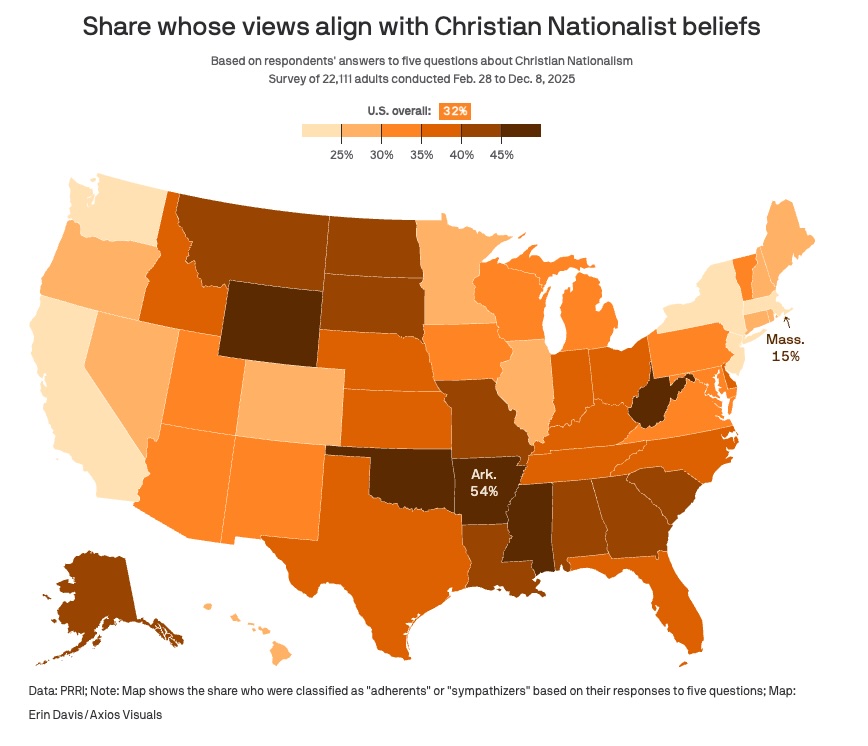
Where are the hotbeds of Christian Nationalism? Who is causing all the problems? One approach is to map out the states with the highest density of right-wing Christian weirdos.

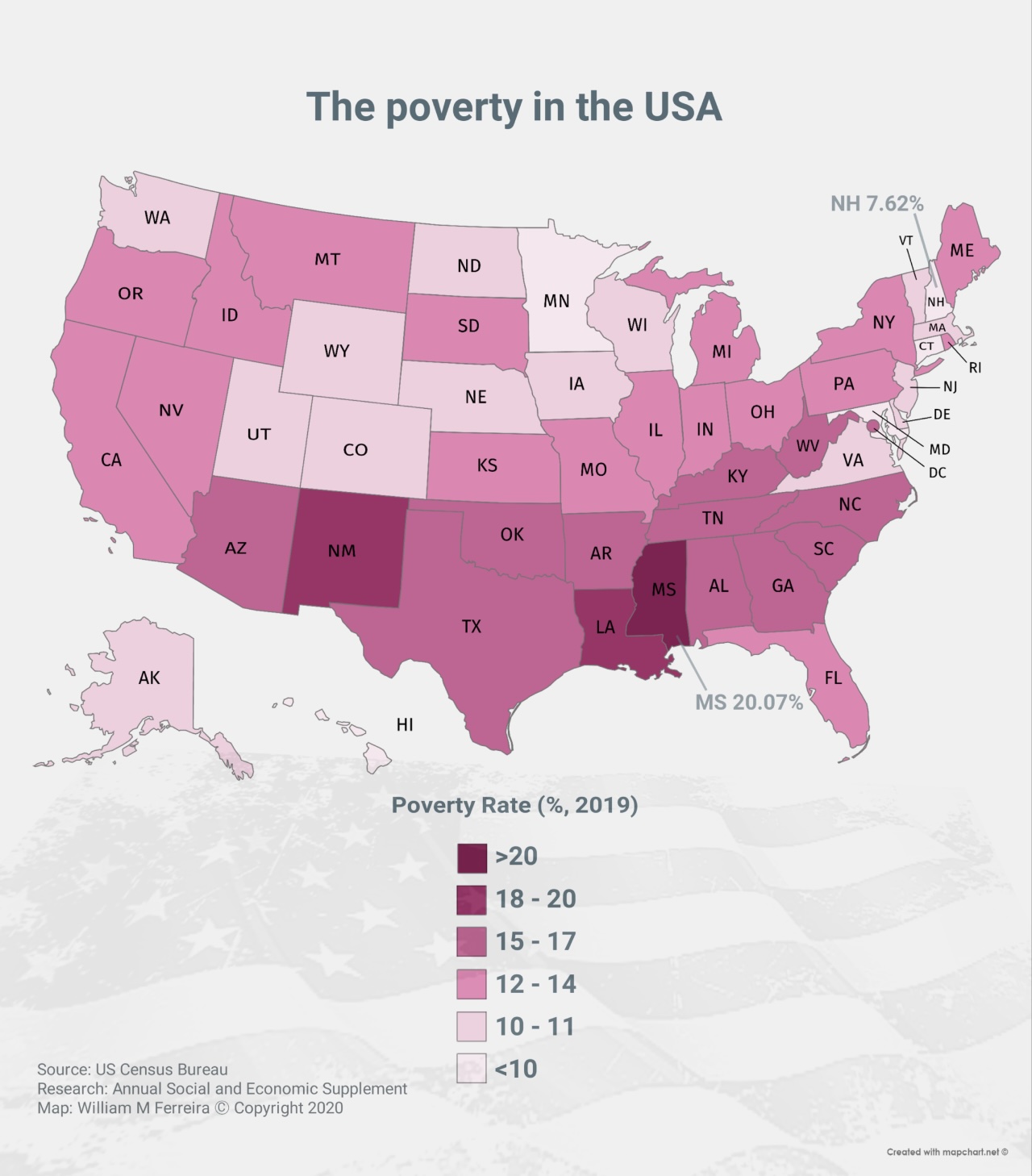
That doesn’t suggest any immediate explanations. My first thought was that maybe there is a correlation with poverty.

Nope, that isn’t it.

But then I noticed that Minnesota is always an exception compared to neighboring states. And that Washington, where I was born and grew up, is always on the side of right.

The correlation is clear: I, personally, am a benign influence on any state where I live.

I thought about leasing my presence to any state that wants to join the progressive future, but I had to nix that plan when I realized I might have to move to Arkansas or West Virginia.

Her schemes grow ever more twisted

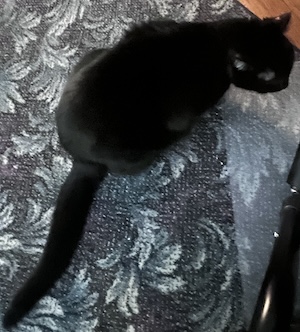
The evil cat is tormenting me. At night, she crawls around on my work desk, rearranging things. This morning, I came in to edit some student papers, and what do I find? She has flicked the computer mouse to the floor, where it shattered into 3 pieces.

I have managed to piece it back together into a clumsily functional unit, but it’s going to be struggle to click on those papers to put big red marks on them.

The video corporate media doesn’t want you to see

This clip was yanked from the Late Show with Stephen Colbert because Trumpian sycophants did not care at all for James Talarico’s lefty message, criticism of the Christian Right, and opposition to the Republican scumbags of Texas. So I’m doing my small part to disseminate it further.

My opinion: he’s fine, but I’m sick of all the pandering to non-right-wing Christians. Maybe it’s too far for Texas, but I’d rather see a forthrightly secular candidate just dismiss all the imaginary saintliness of the Christian faith. It’s never been this idealized “love your neighbor” belief that they preach.