
The Probability Broach: What have the Romans ever done for us?

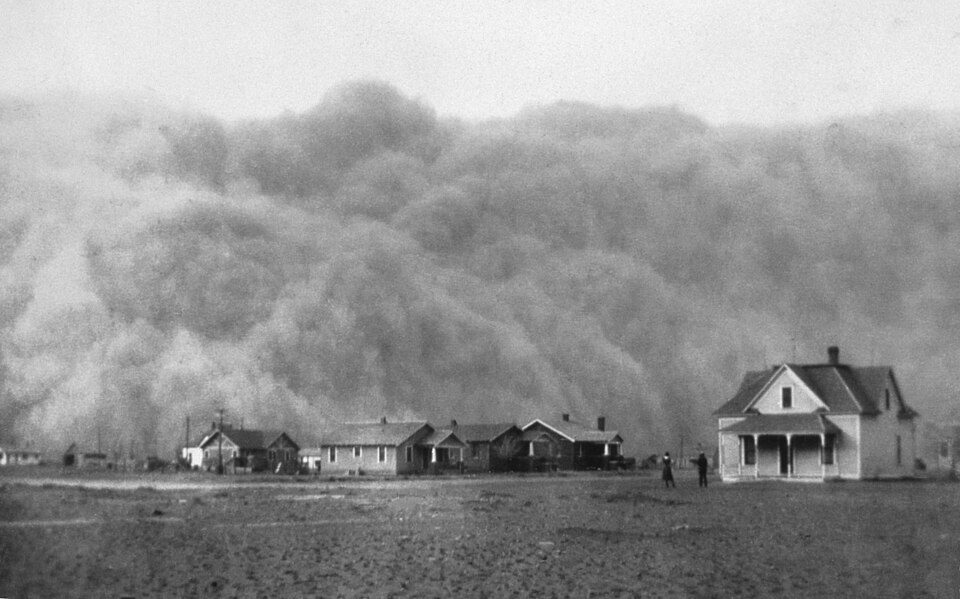
The Roman-built Aqueduct of Segovia

The Probability Broach, chapter 12

We’ve previously seen that in the anarcho-capitalist North American Confederacy, everything is cheap and everyone is rich. There’s no hunger, no poverty and no homelessness. In this chapter, L. Neil Smith makes his most direct attempt at explaining how this can be.

His character Ed Bear narrates that all it took was getting rid of government and all the taxes and other burdens it imposes. When they did that, people immediately became much wealthier, with no downsides. The advanced technology they have is a distant second-place explanation for their prosperity:

“Things aren’t unnaturally cheap. Win, we simply don’t tolerate a parasite that takes half your income and then builds more taxes into everything you buy! You people have been trying to get by on a quarter of your productive capacity—an eighth, when you count the costs of regulation—while the State eats up the rest! It’s a wonder you’ve survived at all!”

Last week, I responded to the preposterous claim that government “eats up” more than three-quarters of people’s productive capacity. If that were true, government spending would have to account for a large majority of GDP. It simply doesn’t.

Smith claims that “the costs of regulation” count for a significant fraction of the costs we pay. And it’s true: Regulation does create costs.

Safety gear makes window-washers more expensive to hire. Sanitary rules make restaurants more expensive to run. Trucking companies have to have rest periods every fourteen hours or so, forcing them to hire more drivers (rather than just buying cheap amphetamine pills). Pollution rules mean that chemical manufacturers can’t dump their waste in the nearest river. Pharmaceutical companies have to run large, expensive clinical trials to make sure that drugs work and are safe before they can sell them.

But he avoids the obvious followup: What are the costs of non-regulation?

You can’t just look at one side of the ledger and assume all the money you spent on compliance is wasted. What dollar value do you place on having clean air to breathe, clean water to drink, healthy food to eat that isn’t tainted or adulterated, and roads that aren’t littered with the smoking wrecks of unsafe vehicles? What’s the monetary value of workers not being killed on the job, or consumers being able to trust that the products they buy won’t poison them, or burn their house down, or do nothing at all?

L. Neil Smith describes government as a “parasite”, which is a telling analogy for how he sees the world. A parasite saps its host of energy for its own benefit, providing nothing in exchange.

This description only works if government is, literally, worthless – if it does nothing valuable, provides no services, confers no benefits. If government creates any value, then abolishing it isn’t a straightforward, no-brainer conclusion. It’s a matter of comparing the harms it inflicts to the benefits it provides, to see whether it’s a net positive in people’s lives. Smith doesn’t want to do that kind of cost-benefit analysis, so he insists every dollar paid in taxes just vanishes into a black hole.

But this is obviously false, whether he wants to admit it or not. Government does do useful things: roads, bridges, canals, water pipes, sewer systems, trash pickup, schools, fire departments, post offices, trading standards, stable currencies, and all the other infrastructure that our civilization depends on.

These things are built and maintained by tax dollars, with government as the coordinating mechanism to channel and focus the collective power of society. No single person could fund it all themself, and if millions of sovereign individuals tried to collectively organize these projects without hierarchy, they’d get bogged down in endless arguments over what should be done and who should do it. In Atlas Shrugged, I called this the “Hume’s Meadow” problem, after a thought experiment by the great skeptic.

Somehow, none of this reasoning makes an impression on L. Neil Smith and libertarians like him. They have a blind spot to all the ways that government improves their lives. They believe these valuable institutions just spring up out of nowhere when we need them.

Then they look around, wonder what government has ever done for them, and grumble that their tax dollars are going to waste. It’s Monty Python’s “what have the Romans ever done for us” skit, except it’s not being presented as parody, but as a straightfacedly literal argument in political theory.

In the very best case for an anarcho-capitalist, private companies would step in to provide the same services. They’d own the roads, the bridges, the sewers, and so on. But even if that happened, why wouldn’t these for-profit businesses squeeze people for at least as much revenue as the government takes in taxes?

Free-market competition isn’t going to help here. It’s not as if you’re going to have multiple road networks (or multiple sewer pipes!) connected to your house. And even if that somehow happened, why wouldn’t the companies that owned them conspire among themselves to fix prices so that they could all make more profit? There’s no law against that in this world!

After their lunch, Ed and Win follow up on the next lead in their case:

Laporte University, Ltd. is the local push-back-the-barriers joint where Bertram’s people shared facilities. The Confederacy draws no distinction between applied science and pure research. Those who can, do. They also teach. Those who can’t, maybe they wind up in Congress like back home.

Dora Jayne Thorens didn’t belong in Congress, unless you prefer the delicate way they put things in Victorian novels. A six-foot platinum blonde with a figure that should have won her a staple through the navel, she was also chief of paratronics research.

Win is the one narrating this leering paragraph, and I’d say the text was trying to depict him as a crudely sexist ogler, except it seems clear this is the author’s predilection being expressed through the character.

There’s no plot reason she had to be a beautiful woman (I puzzled over “a staple through the navel” until I figured out it meant she looks like the centerfold model of a man’s magazine). It’s just that Smith wants to populate his utopia with gorgeous blondes for himself to write his drooling fantasies about.

“Mr. Bear?” She looked at Ed, and then at me.

“We’re both Mr. Bear, Ed and Win. Did you lose this felt-tip recently?”

“I’ve got a deskful just like it. Is this what detectives do these days? It’s certainly service.”

Win says he found the pen in a desk drawer in the United States of America, and a light dawns. Dr. Thorens runs off, shouting to her colleagues that they’ve done it.

New reviews of The Probability Broach will go up every Friday on my Patreon page. Sign up to see new posts early and other bonus stuff!

Image credit: Bernard Gagnon, released under CC BY-SA 1.0 license

Other posts in this series:

New on OnlySky: Abortion bans don’t stop abortion

I have a new column this week on OnlySky about the effect of abortion bans. They don’t decrease abortion – they increase it.

It’s been three years since the Dobbs decision that allowed red states to pass abortion. It was always obvious that wealthy, privileged people wouldn’t be affected by this – they can just travel to where abortion is legal. But you might have guessed that poorer and working-class people, who can’t afford the time or the expense, would be unable to access abortion care.

However, that expectation would be wrong. The data shows clearly that America’s overall abortion rate has gone up, not down. Blue-state shield laws, which allow providers to mail abortion medication to red states, have made these bans far less effective than their authors would like. This is a victory for personal liberty and reproductive rights, and a resounding defeat for the religious right lawmakers who spent decades trying to reach this point.

Of course, this is hardly good news. The flip side is that, while abortion hasn’t gone down, maternal mortality has gone up. This is exactly what we should have expected from laws that make doctors afraid to treat women in the throes of a pregnancy-related medical emergency. That’s not an accident, but their entire purpose.

Read the excerpt below, then click through to see the full piece. This column is free to read, but members of OnlySky also get special benefits, like member-only posts and a subscriber newsletter:

What this shows is that the religious right has tried their utmost to deprive women of autonomy—and they’ve failed.

Let’s not forget, they’ve spent a staggering amount of time and energy getting to this point. After their leadership made a political decision that fighting desegregation was a lost cause, the religious right reorganized around banning abortion. That’s been their all-consuming obsession for decades.

They’ve lobbied, marched and picketed. They’ve preached countless anti-choice sermons calling down hellfire on America. They’ve poured billions of dollars into getting anti-choice politicians elected. They’ve tried to frighten and shame women, squeeze clinics out of business with onerous regulations, and chase doctors out of practice through harassment, intimidation and outright violence.

This was supposed to be the moment of their triumph. The overturning of Roe was the culmination of their dreams. They thought it would be the start of a new era of glorious theocracy, where their particular version of religious dogma would reign over the land.

Continue reading on OnlySky…

The Probability Broach: Robots do nothing

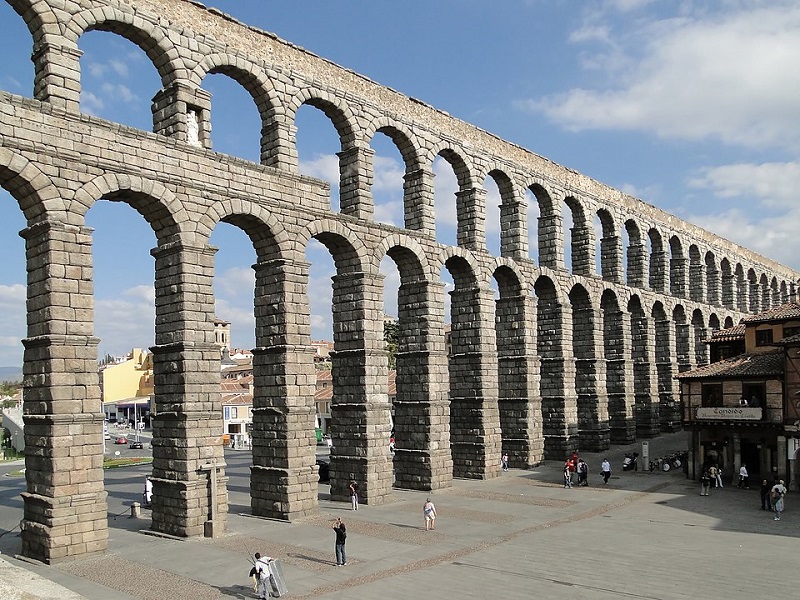
A black and white photo of a factory assembly line

The Probability Broach, chapter 12

Over lunch, Ed and Win Bear are debating the merits of their respective governmental systems. Win protests half-heartedly that his world isn’t all that bad:

“We must be doing something right, the U.S. is the most prosperous—”

Slum in your world.”

“The poorest American’s rich, compared to other countries!”

“And the poorest Confederate’s rich, compared to most Americans. All your taxes and regulations freeze old wealth, and make new fortunes impossible—except for those with political pull. The rich fend off the law, while those below get picked clean by your IRA.”

“IRS, though I’ll concede there isn’t much practical difference.”

First of all, how does Ed Bear know anything about Win’s United States? He’s never been there or even seen it. He might argue on behalf of his own society about why it’s better, but how can he feel qualified to criticize someone else’s?

On top of that, this feels like a Gish Gallop, where one party in a debate throws out dubious assertions too rapidly for the other side to counter them all.

Taxes freeze old wealth? Including progressive tax systems, which tax the rich at higher rates and use the revenue to fund safety net programs for the poor? How does that preserve old wealth?

This is a bald-faced assertion that programs whose goal is to decrease inequality actually increase inequality. I’d argue the point, but there’s nothing to argue. Smith doesn’t even try to justify it; he just makes the assertion and leaves it hanging. It’s like Ayn Rand asserting that regulation makes coal mining more dangerous (somehow).

Now, I’ll grant it’s true that there’s such a thing as a regulatory moat: big companies that lobby for government licensing and burdensome regulations in order to suppress competition. The big players can afford the costs of compliance, while smaller competitors can’t. But the solution isn’t to have no regulations at all!

In fact, Smith’s own argument proves the point: large corporations will do anything they can to shut out competitors. In our world, laws restrain them from doing that, however much they might want to. In an anarcho-capitalist world, nothing prevents them from using dirty tricks or outright violence. They could hire an army of Pinkertons, or whatever the NAC equivalent is, to threaten competitors with a gun duel if they don’t leave town. Under the anything-goes customs of this society, that’s perfectly allowable.

This goes back to the common libertarian misunderstanding that a free market is a self-sustaining state of nature. Actually, markets require laws and regulators to protect their existence and keep anyone from tipping the playing field too far in their own favor. Just as a sports game needs rules and referees to keep from degenerating into a brawl – and it doesn’t invalidate this point that referees are occasionally corrupt or unfair – markets can only exist when authorities uphold the preconditions for free and fair commerce.

“Tell me, how long does an American work to buy a car?”

“He can’t, any more. We used to spread it over a couple of years, why?”

“Win, a Confederate hoverbuggy represents about three weeks’ earnings—don’t look at me that way! How about a home?”

“Nowadays, forget it. Ten years ago, maybe five years’ wages. Actually, you’re talking a forty-year mortgage, even with—”

“I paid my house off in six months. And Win, this meal you’ve kindly provided is an expensive one. Meep’s got decorators to pay, after all. We could’ve eaten under the corner for the same price in copper!”

It’s also cheap because the NAC has no food safety inspections or labs analyzing ingredients or safety, of course. Getting rid of those undoubtedly saves money. But who do you call if you get sick from that cheap lunch?

It’d be one thing to argue that we have too much regulation, which creates inefficiencies that make goods more expensive without adding adequate value in return.

Smith isn’t arguing anything so modest. He’s saying that if we scrapped all government, the payoff period of a mortgage would fall from thirty years to six months, and the cost of a car would fall from several years’ earnings to several weeks.

In other words, he expects us to believe that state-imposed overhead makes up something like 98% of the cost of a house or a car. And he generalizes this to all goods, claiming that taxes and the cost of regulations accounts for a huge majority of the prices we pay for everything.

There’s an easy, back-of-the-envelope way to check this. If it were true, government spending would have to account for a massive majority of GDP. (Because all that money the state steals from hardworking citizens presumably goes somewhere, and isn’t just put in a pile and burned.)

The real value, as of 2023, is around 36% for the United States. That’s broadly in line with most industrialized countries. Even if you assume that all this taxing and spending creates no value (a dubious point we’ll discuss next week), it’s clearly not the case that it overwhelms the economy to the point of crowding out all else.

“How come everything’s so fucking cheap? Don’t your workers have to eat? Or is everything automated?”

“Automation doesn’t help: it always takes more people to create and maintain the machinery, and a healthy economy’s real problem is chronic labor shortages. Things aren’t unnaturally cheap. Win, we simply don’t tolerate a parasite that takes half your income and then builds more taxes into everything you buy!”

Wait, what?

It’s hard to understand Smith’s argument, but he seems to be saying that automation doesn’t make the economy more productive, because it takes the same amount of labor to maintain the machines that make stuff as it would have to make that stuff by hand.

This is screamingly, unbelievably wrong. An assembly line with industrial robots can’t make cars faster than if each employee was a blacksmith hammering out the parts?

Of course automation makes us more productive. Why else would anyone bother with it? Why have we been inventing labor-saving technologies since at least the Roman era? This is an elementary failure, not just of political understanding, but of basic reasoning.

My best guess is that this bizarre assertion is the fruit of Smith’s ideologically driven one-reason worldview. He doesn’t want readers to conclude, incorrectly in his opinion, that the North American Confederacy is superior only because it has more advanced technology. (Because then a different society with the same technology would be just as good to live in.)

He wants readers to conclude that government and taxes are the only source of evil, and that every other good or bad thing about a society traces back to whether it has them. But to flatten a society down to the point where that’s the only thing that matters, he has to do violence to elementary logic.

New reviews of The Probability Broach will go up every Friday on my Patreon page. Sign up to see new posts early and other bonus stuff!

Other posts in this series:
New on OnlySky: The end of marriage?

I have a new column this week on OnlySky. It’s about the prospect of marriage going extinct, whether it can be saved, and whether it deserves to be.

Contra the princess fantasies and cottagecore dreams of the wedding-industrial complex, marriage is becoming an endangered species in America. More and more American women are happily single, and fewer girls than ever say that marriage is their aspiration. Even in red states, divorce rates are rising.

The decline in marriage is the direct result of women recognizing that it’s a bad deal for them. All too often, married women end up working outside the home and bringing in an income, while also being expected to run the household, do all the chores and raise the children. The demands of modernity have increased, but the expectations of tradition and culture haven’t decreased to compensate. Top this sexist sundae with the cherry of more-conservative men doubling down on demands to limit women’s autonomy, and it’s no wonder that women are heading for the exits.

The good news is that men can still change this. But it won’t happen through cheap machismo or obnoxious preaching about what God wants. It will only happen when men learn to be better partners, husbands and fathers. Are we up to the challenge?

Read the excerpt below, then click through to see the full piece. This column is free to read, but members of OnlySky also get special benefits, like member-only posts and a subscriber newsletter:

All these factors converge on one result: increasingly, women are finding marriage unappealing. They see it as a ticket to second-class status where they’re expected to subordinate their own lives and dreams to the desires of men.

The data bears this out. According to a new poll, for the first time ever, 12th-grade girls are less likely than 12th-grade boys to say they want to get married. Significantly, the number of boys who aspire to marriage has been unchanged for thirty years, but the girls’ numbers are dropping.

Another poll finds that male conservatives now rate having children and being married as among their top priorities, while for progressive women, both of those have dropped to the bottom of the list.

More and more American women are staying single by choice. According to a Wall Street Journal article reporting on analysis by the Aspen Economic Strategy Group, over half of women ages 18 to 40 are single. And they’re happy that way: Pew data suggest only 35% of single women are looking for a relationship, versus 50% for single men.

Continue reading on OnlySky…

The Probability Broach: Too much freedom

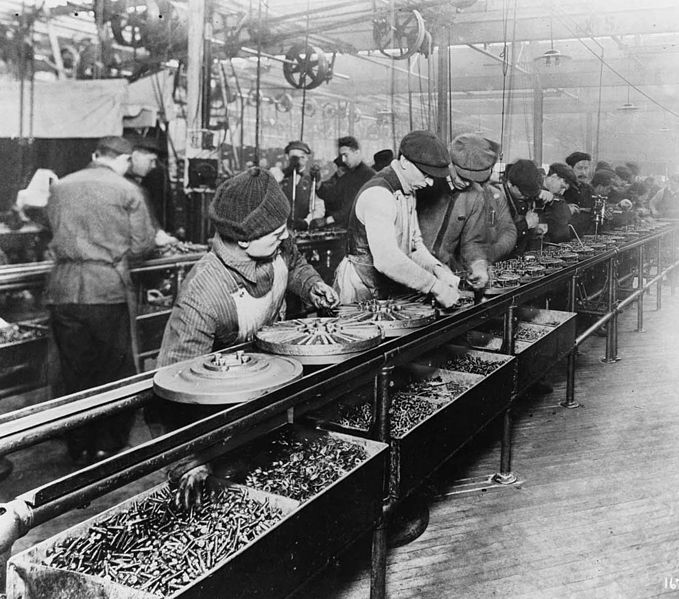
A huge cloud of dust about to engulf a farm

The Probability Broach, chapter 12

Win and Ed have one lead to follow up on: the university researcher, Dr. Thorens, whose name Freeman K. Bertram gave them. According to Bertram, Dr. Thorens is the best person to answer some of their questions about parallel universes.

Before they head over to the university, they stop for lunch at a restaurant called Mr. Meep’s Spanish Hideaway:

Meep would take explaining in anybody’s universe. A chimpanzee, he’d adjusted his wrist-talker for what he fancied was a Spanish accent, then grafted a gigolo moustache to his upper lip to go with his bolero jacket, Mexican bellbottoms, and one of those off-duty bullfighter hats, the kind with little balls of fringe around the brim. When he lifted it, his hair was dashingly oiled, parted down the middle like Rudolph Valentino.

Culture shock is a terrible thing. Ask the man who has one.

Win asks Ed, “Doesn’t this place seem a little silly, even to you, sometimes?”—which I guess you could take as evidence of self-awareness on the author’s part.

They eat and smoke. Because Win has a pocketful of cash—the blood money he received from the prison company, as payment for failing to protect his prisoner—he offers to pay for lunch. But when they get the check, he’s shocked by how cheap it is:

Ed took longer finishing his meal than I did—I still say chocolate turkey is a little heavy for lunch. Since I was suddenly wealthy, I decided to pay. The bill popped up on the screen and I turned to my munching messmate: “Ed, is this right, a silver quarter-ounce? That’s only a buck and a half!”

“Mmphl. Probably added in your cigar by mistake. Need some money?”

“No.” I observed absently. “Nor does anybody else around here, apparently… Everywhere I go in this town, everyone has lots of cash, and everything costs practically nothing. Where are you hiding your poor people?”

As we previously saw, Smith maintains his economically implausible insistence that everything is cheap and everyone is wealthy in the North American Confederacy. In this section of the book, he tries to explain how that can be possible.

Ed explains that by the standards of his society, he is one of the poor people (“When did you ever know a rich detective?”), but it doesn’t matter. Once they abolished government, Capitalist Magic made everyone prosperous and comfortable. He reminds Win that their super-advanced medical technology fixed his injuries virtually overnight, and the same is true of every other problem as well:

“Fractured bones are a problem we’ve solved, largely with substantial amounts—by standards you’re used to—of scientific and economic freedom.” He took the last bite of pastry and wiped off his chin. “We’ve also solved hunger, and by the same means. All you have to do is leave people alone.”

“To die in the streets of old age or starvation? That’s why you need government, Ed, to take care of those who can’t—”

“Wrong way around, Win. Politicians need human misery, for their very—”

“Now wait a minute! We spend trillions, just to—”

“Spread the misery around! My friend, government’s a disease masquerading as its own cure.”

These are bold claims. Smith says that government never makes anything better; it only holds people down. If we scrapped all laws, regulations and safety-net programs, the economy would flower and poverty would disappear.

Let’s put these claims to the test with a real-life example of what happens when we “leave people alone”.

After the Civil War, the U.S. government passed a series of Homestead Acts that gave away unclaimed land in the western Great Plains (“unclaimed” in the sense that its indigenous inhabitants had been forcibly displaced or wiped out) to white settlers who were willing to farm it.

It was known that this region was arid, harsh and susceptible to drought. But millions of settlers flocked to claim land, because of a popular belief called “rain follows the plow” which held that cultivating the land would make it more fertile and temperate.

Nothing could be more libertarian than this. The homesteading land rush was motivated by the same belief L. Neil Smith argues for in this section: the belief that people do best when they’re left alone. All we have to do is grant them the freedom to do what they think best, and then stand back. Smith’s logic would lead you to believe that they’d transform these arid lands into a Garden of Eden.

The results didn’t live up to these rosy expectations.

A wave of settlers plowed the prairie, using newfangled technology like the combine harvester. They ripped up the perennial native grasses whose deep, dense root networks held the soil together. The crops they planted to replace them, like wheat, were shallow-rooted annuals that couldn’t perform the same function.

When drought inevitably came, the soil dried out and crumbled, and Great Plains winds did the rest. They scoured the loose topsoil, catching it up into huge dust storms that darkened the daytime sky for miles. The dust smothered towns, made travel impossible, and killed people and animals who suffocated or contracted pneumonia from inhaling it. Millions of people lost their homes and their land, becoming penniless, hungry refugees.

The Dust Bowl can’t be blamed on regulation, government overreach, or political machinations. It was caused by—if you care to put it in these terms—too much freedom. Letting everyone do what they wanted led directly to ecological devastation and economic collapse. If the government had exercised a heavier hand, preserving some of the native prairie and keeping it off-limits to farming, it wouldn’t have been as big of a crisis.

You might be wondering, why hasn’t there been another Dust Bowl since the 1930s? The answer is that it’s because of government intervention.

The New Deal created agencies like the Soil Erosion Service, which taught farmers to use anti-erosion practices like terracing and cover crops. The states created soil conservation districts which made these practices mandatory.

Another government initiative, the Great Plains Shelterbelt, hired CCC workers to plant trees across hundreds of miles to serve as windbreaks. The Conservation Reserve Program paid farmers to take land out of production, replacing crops with native vegetative cover. The idea of paying farmers not to plant crops has been the target of endless mockery, but there’s sound ecological reasoning behind it.

The Dust Bowl is a dramatic example of how excessive freedom can lead to disaster, but there are others. Fishing fleets with no restrictions on the size of their catch have pushed commercially valuable fish species to the brink of extinction, causing the collapse of coastal economies.

Desert farms and settlements have pumped too much water from aquifers like the Ogallala, causing wells to run dry and harvests to fail. Drought and overuse has forced entire cities, from Cape Town to Mexico City to Tehran, to reckon with the prospect of running out of water. Governments in these places have had to impose rationing to keep the taps from going dry.

These are all Prisoner’s Dilemma situations: collective action problems where, when every individual makes the self-interested choice, it results in the worst-case outcome for everyone. If everyone voluntarily agreed to rein in their selfishness—leaving some land unplowed, catching fewer fish, conserving water—they’d all be better off. But any such agreement will collapse in the absence of any way to enforce it.

Smith’s cornucopian ideology (also seen in Ayn Rand) holds that the bounty of nature is inexhaustible—so the more people who work to extract resources, the more there’ll be for everyone. If you hold this belief, it’s a logical conclusion that government regulation can only decrease humanity’s output, never increase it. Of course, a libertarian has to say this, because it’s the only scenario that justifies the absence of government.

But cornucopianism is false. The reality is that we live on a finite planet where natural resources can be depleted. If money is the sole driving force, there’s no incentive to preserve something till tomorrow when you could make a profit from it today. That’s why, sometimes, we need a government—which just means an enforceable collective agreement—to conserve limited resources and prevent anyone from taking more than the planet can bear.

New reviews of The Probability Broach will go up every Friday on my Patreon page. Sign up to see new posts early and other bonus stuff!

Other posts in this series:
New on OnlySky: American religion continues its fadeout

I have a new column this week on OnlySky. It’s about the continuing trend toward a secular future, in America and other nations.

In most countries, the power and influence of religion declines as the populace becomes wealthier and more educated. As people look toward the future with greater optimism, they feel less need for the illusory consolation of faith. For a long time, the United States was an outlier in this regard: a rich, developed country where religious fundamentalism exerted a powerful political influence.

But those days may be coming to an end. A new poll shows that less than half of Americans say religion is important in their daily lives. This is the first time that this has ever happened, and it points toward a future where religion has waned in cultural influence and power – despite the regressive right-wingers in office doing their utmost to prop the churches up. Their best efforts have done precisely nothing to stop this trend.

Read the excerpt below, then click through to see the full piece. This column is free to read, but members of OnlySky also get special benefits, like member-only posts and a subscriber newsletter:

The numbers of atheists, agnostics and generally nonreligious people have been growing for years. As a share of the U.S. population, they now outnumber every single religious denomination. As of 2021, for the first time ever, less than half of Americans belong to a church, synagogue, mosque or other organized house of worship.

Even among those who still identify as religious, the intensity of their belief is declining. Increasingly fewer people say that religion is an important part of their lives.

There’s a new poll on this topic, and it comes with a whopper of a title: Drop in U.S. Religiosity Among Largest in World.

Continue reading on OnlySky…