You may have noticed that I haven’t been writing on here very much. There are a few reasons for that and they are mostly good ones!
As I explored in my last post, my cancer treatment is over–I’m cancer-free as far as the doctors can tell, mostly recovered from my surgery, and (the really fun part) officially post-menopausal. I’ve been spending a lot of time on self-care and trying to slowly dip my toes back into life.
That said, it’s been less “dipping my toes in” and more straight up diving into the deep end. For starters, I’m about to switch jobs after being where I’m at for three years, which is…a very long time in Miri-Years. Yikes. Yikes.
Also, I started a podcast! It’s called 2 AM Talks. The idea is that each episode, I interview a friend about a topic–any topic–that they really care about. I think it’s going to be lots of fun. You can subscribe to it on Anchor, Pocket Casts, iTunes, Spotify, Google Podcasts, Stitcher, and some other services I’ve honestly never heard of. Follow it on Twitter here. (I’ll probably write a longer post about this later because I have some Thoughts about creative endeavors and why they’re important.)
On a slightly different note, I’m also writing a book. It’s a book of essays about my experience with cancer treatment, although I feel like describing it that way kind of undersells what it’s going to be. I am (for now) unusually optimistic about this compared to how I usually feel about my big writing projects, and I’m actually putting in the time and not giving up on it. I joined a writers’ group and everything! Anyway, I don’t have a title for it yet or any plans for what to do when it’s done, but y’all will be the first to know.
As I also discussed in the last post, I’m gardening a lot and it’s quite labor-intensive at times but it’s AMAZING. Seriously, if you’ve ever thought that you might enjoy starting an edible garden, I suggest you go ahead and try it. It’s a very unique and indelible experience.
That’s all for now! I have some vacation coming up in about a month, which usually means more writing. I hope to have something for you soon.
And just like that, it’s over. The surgeon said there’s no evidence of cancer remaining in my body, my hair is growing back, my new boobs are growing steadily until I decide they’re big enough, and I’m trying to grasp that thread of my life that I left dangling over half a year ago and tie it to the one I’m holding now.
As anyone who’s had cancer knows, you’re never really “done” with it. Even after successful treatment, there’s always the possibility of recurrence, the long-term consequences of chemo or radiation, and, in my case, a slew of reconstruction-related procedures and an oophorectomy in 8 years.
That said, now—when I’ve returned to work after my surgery—seems an appropriate moment for a post-mortem on the whole thing. (Sorry, poor choice of wording.)
For a brief window of time after my diagnosis I thought it would be my unraveling. I quickly realized that, instead, it would be my becoming. If a year ago I was in my intermediate Pokémon evolution, I’m now in what feels like my final one. (Don’t forget, though, that even fully evolved Pokémon continue getting stronger and learning new moves, and that eventually someone might “discover” mega-evolutions and I might change form again. I’ll leave it to you to decide which Pokémon I might be, before this analogy completely runs away from me.)
Before this I was essentially comfortable with who I was, with how I lived my life and conducted my relationships, with the career I had chosen, with the way I spent my time, and with that most fragile of things, my body. The illness transformed the way I saw all of these things, not in the sense that it made my views totally different, but in the sense that it strengthened, catalyzed, leavened, solidified them.
Any lingering doubts I had in myself or in the people who form my inner circle disappeared. Before, there was a part of me that really believed that when the time came to sit for the exam, the people around me would fail me, and more importantly, that I would fail myself, and that I would be alone in my darkest hour. But nobody failed.
Well, perhaps a few people failed. But their grades had been slipping for a long time, and some of them had really been failing already.
I no longer doubt that my friends and family will carry me forward when I can’t carry myself. But I also no longer worry that I’ll ever become completely unable to carry myself. I don’t struggle with imposter syndrome anymore, and I don’t worry that I’m not enough of an “adult.” What does that even mean for someone who has made the decision to carve up their body to save their own life? What does that mean for anyone, really?
What I keep coming back to every time I write about this strange episode of my life is simply how banal most of it was. It was so banal that I’m not sure I could even claim that I cried more, or was sadder or more scared, on average during this time than during any other period of my life. In fact, I will still say that the clinical depression I experienced from ages 19 to 22 was much worse and left me with so much fewer resources to help myself and seek support from others.
I would not repeat so much as a month of that experience for any price. The cancer, eh, fine, especially if we can do the surgery with proper pain management this time.
The point of that isn’t to pit depression and cancer against each other generally or adjudicate whether mental illness really is worse than medical illness or vice versa; it’s just to say, I already had unimaginably more strength than I thought I did. It just hadn’t been tested and proven yet.
After my surgery, which to me represented the culmination of most of my worst fears, people wanted to know if it was really “as bad” as I thought it would be. Of course, they wanted to hear that it wasn’t. Unfortunately, it was even worse than I thought it would be. It was worse than I had expected even at my most panicky moments. So this isn’t the story of how I overcame those phobias. It’s the story of how I learned that I can survive weeks of unrelenting pain, panic attacks, and suicidality and come out the other side essentially myself.
I’m comfortable saying that I’ve been traumatized by that experience. In dreams I wake up after surgery only to be told that something went wrong and it has to be done again, over and over. Most evenings, when I’m home from the life I’ve finally returned to, alone and in silence, an inexplicable sadness comes over me—so inexplicable that I know exactly what causes it.
It’s not that I “miss my old body,” though sometimes I do. What I feel goes much deeper than that. There are memories, images, that fill me with something I can only call grief—looking back at my parents as I was wheeled away to the OR; watching them cut up my food for me when I couldn’t; walking around on the deck of their house, back hunched, trying to explain to my mom a meditation exercise I was trying in which you breathe the pain in and then breathe it out; when my friends visited me at home two days after and I sat, again hunched, mostly unable to speak or even look at them; the first time I sat on the deck in good weather, no hat, and felt the sun on my skin again; and more, and more, and more.
All of this lives in me now, not compartmentalized or repressed but very much there, just beneath the surface. It ebbs and flows and sometimes retreats deeper and other times comes closer to my skin, where I can all but feel it with my fingers when I press them onto all the parts of me that no longer feel.
It hurts all the time, but it’s also, in its own way, completely normal and healthy. I now contain a lot more things than I did six months ago, and not all of them hurt.
Rather than feeling diminished by the experience, I feel expanded. Which is fortunate because it gives me enough room to contain all of the contradictions inherent to this process. My friends were probably hopelessly confused. One day I’d be crying about what an ugly scarred half-person I am; the next day I’d be marveling at how it feels to dance, to sit in the sunshine, to run my fingers over my healing incisions. One day I would say that my life has been standing still; the next I’d be talking about all I’ve learned, everyone I’ve met, everything I’ve planned.
And then there were the times, most of which I never found the words to explain to anyone, when I felt like I was experiencing something transcendent. I had feelings that felt completely outside of my normal existence and that I couldn’t have had any other way. I’m not a religious person, so I don’t think of it that way. Instead I think of them as moments when I felt the pulse of life. I felt how precious it was, how sacred. I felt overwhelming gratitude, both towards people who helped me in even the smallest ways and towards the universe itself. I felt like I could survive anything.
And then I’d go back to feeling like a broken old piece of crap nobody wants anymore.
Well, it may be confusing, but it’s also part of the experience of being ill—and, to a slightly lesser extent, of being human. I invite you to enter the contradiction with me and make yourself comfortable.
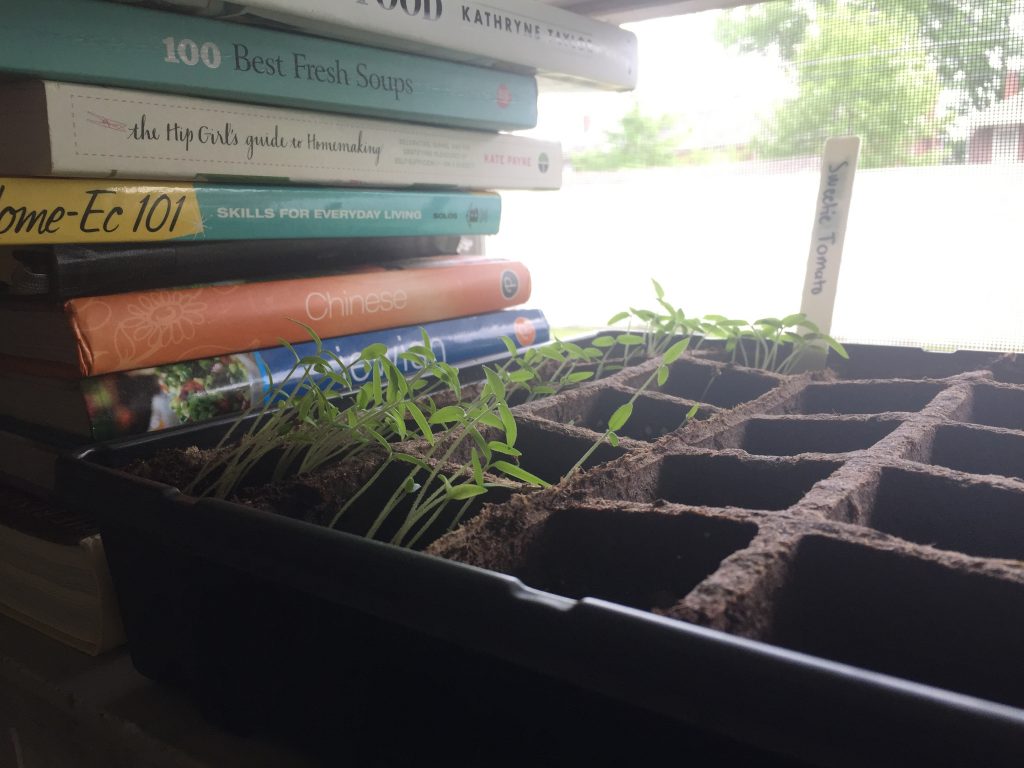
Besides work and spending time with friends, nowadays I’m often working on my garden. Last fall I decided I wanted to try growing fruits and vegetables in the spring, and I had all these ideas about buying all kinds of plants and building a structure to house the containers and starting seeds early indoors, and for obvious reasons that didn’t happen. So I started last week. It was probably slightly late to plant seeds, but it is what it is and it’ll be what it’ll be.
I’ve always loved plants, and always felt disproportionate grief when they sickened or died. Now it’s no different, except that I’m even more aware of the precariousness of life, of the journey seeds must undertake to become plants, and how perilous all of that is. Soil, water, warmth, light. And out springs something that nourishes.
I used to feel beautiful. Now I don’t, and it’s hard to fully imagine what that even felt like. But I think I’m finding my way back to it, slowly. In the meantime, I look around at my pots full of fresh soil and think, maybe I can still make something beautiful.
I understand how plants “work,” mostly, but the more fundamental part of my brain is still stunned every time a seed germinates. I’ve now planted everything I’m going to plant, and some of the seeds have sprouted–pulling themselves up through the soil, hunched over like I was right after surgery, slowly stretching themselves out to stand tall just like I did, and finally unfurling their first two leaves, just like the first time I felt well enough to bring my arms up and stretch them out from my sides as hard as I could, feeling them become a part of my body again.
I can never fully expect them to do it. Every time I’ve ever planted a seed I’ve thought, no way, there’s no way you can just stick these tiny hard things into the ground and a week later they turn into actual plants.
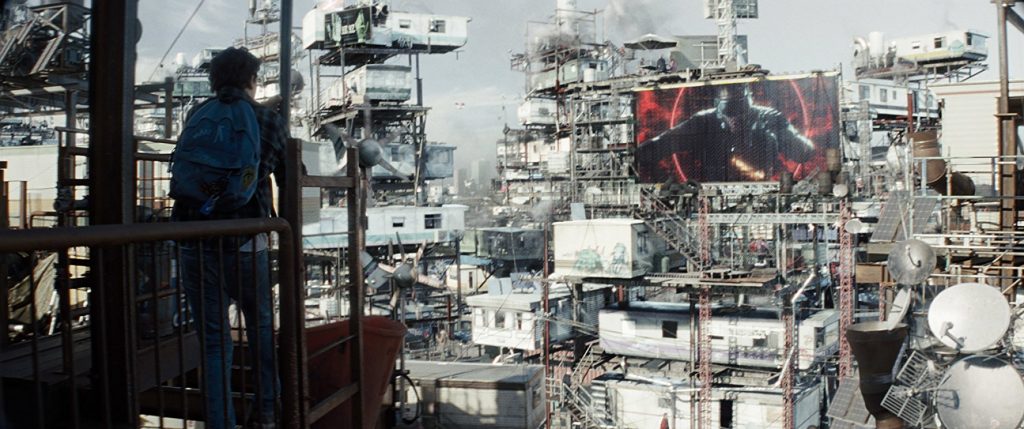
Last month I saw this trailer in a movie theater and was captivated:
Yup, I didn’t realize it was for Ready Player One until close to the end. But I couldn’t look away from this trailer, and have watched it a bunch of times since then.
Anytime there’s a cultural phenomenon like this–something that’s so beloved by people I know and so hated by other people I know–I get curious. To wit, the most recent person to recommend Ready Player One (the book) to me was a super progressive lesbian who’s only slightly older than me and not exactly a gamer. So that got my attention.
(Last time this happened, with Fifty Shades of Grey, I couldn’t even get through the first page because of how bad the writing was. So whatever it was that drew so many people to it remained a mystery to me.)
So recently I saw the book in a bookstore, picked it up to read the first few pages, and rapidly found myself totally engaged in it! This was stunning. Sure, there were some boring parts I skimmed, but that’s most novels for you. I was surprised that despite the general shallowness of the book’s overarching themes and philosophy, the writing itself was good, and I wanted to read more.
Having now finished it, I still agree with most of the political critiques of it that people have been making for years. (The ones I don’t agree with are either over minor details that I think the reviewers missed, or else matters of taste–I found the writing interesting, others didn’t.) Even if you read this book in its historical, pre-GamerGate context, it has some troubling things to say about people and about the world. Post-GamerGate, the book becomes extremely tonedeaf, which is a fact not lost on many of its critics. [1]
Ready Player One came out in 2011, the same year that Anita Sarkeesian started her Tropes vs. Women series, which she followed up with Tropes vs. Women in Video Games in 2013, intensifying the online abuse against her to a fever pitch. Then, in 2014, Zoe Quinn became a target after her abusive ex-boyfriend posted a screed against her to incite further online threats and harassment, and the festering cesspool we know as GamerGate truly kicked off. In that context, even a “shallow” and “harmless” book about nerdy boys obsessing over pop culture trivia doesn’t feel so harmless anymore. On the one hand, it can be important to evaluate literature in the context it was originally written. On the other hand, had Ernest Cline been a more socially aware person–or, perhaps, someone other than a white man–he would’ve seen that particular writing on the wall a long time ago. He may not have found the idea of a glorified nerdy trivia contest as appealing.
That said, the book is at least somewhat original in a few interesting ways. For instance:
1. The dystopia is created by an energy crisis.
Yes, that’s not exactly unique, but I can’t count the number of speculative fiction books I’ve read in which dystopian societies have been created by nuclear war, alien invasion, a sudden massive environmental cataclysm, Big Bad Government suddenly becoming super oppressive, man, and so on. Ready Player One goes with what honestly feels like the more likely scenario: our reliance on fossil fuels and disregard for the environment will gradually produce even more extreme income inequality and lower quality of life significantly for everyone except the super-rich. Authorities like government and the police won’t necessarily become any more oppressive than they already are; they’ll just lose their influence. (In the book, the police seem completely absent until the very end [a minor plot point that nevertheless kind of ruins the vibe], and the federal government is mostly a useless figurehead. Wade mentions that he doesn’t bother voting for them because they’re all “reality stars” and the like, which is uh…prescient.)
Corporations, on the other hand, will run the show. Ready Player One is a (possibly unintentional) satire of the “corporations are people” concept in that Innovative Online Industries, the villain of the story, has countless avatars in the OASIS, trying to win the easter egg hunt.
2. Technology has actually improved education.
But one cool thing about the society Wade lives in is that the OASIS has made free, decent public education available to all, because the creator of the OASIS set up a foundation that provides free VR equipment to all students. This is how Wade is able to have a good high school education despite living in the slums, and it’s how he’s able to access the OASIS and compete in the easter egg hunt to begin with. He gives a lot of details about how virtual school works, and while I won’t bore you with the details here, it’s seriously cool.
3. It’s actually one of the least gatekeeper-y sci-fi books I’ve ever read.
Despite what everyone says about the book being inaccessible/irrelevant to anyone without an interest in/obsession with 80s pop culture, I found the opposite to be the case. And to be clear: I have no interest in 80s pop culture, and no personal connection to it, since I arrived as an immigrant in the United States long after the 80s were over and that stuff holds no nostalgic appeal for me, or any other appeal. I kind of hate most of it, actually.
And yet for all the references Wade and his friends drop, he explains all the important ones. Reading the book feels less like being gatekeep-ed (gatekept?) out of a nerd club and more like having someone excitedly rant to me about the stuff they love, and why it’s cool. I actually enjoyed some of the things I ended up learning from the book, such as how to achieve a perfect score in Pacman and how some of the earliest video games were made. I didn’t come out of the book with any more of an interest in playing those games and watching those movies, but I felt like I’d stepped into someone else’s experience for a bit and that was really cool to me.
Furthermore, unlike many SF/F novels that just drop you into an unfamiliar world and force you to figure it out as you go along, Wade actually explains a lot about how his world works, including the energy crisis, how the OASIS works, and what living conditions are like for most people. While this may be boring to some people, I found all of it fascinating! It was like reading a first-person anthropology study. He does the same with a lot of the video games he plays, which was cool for similar reasons even though I don’t personally like those games.
4. Success requires both luck and hard work.
Some critics have focused on the fact that the book implies that having a perfect knowledge of 80s pop culture is the most important thing in the world and that Wade just happens to succeed because of this.
The actual plot is a bit more subtle than that, in some interesting ways that I’ll get to later. A brief recap: in a dystopian future, the OASIS, a free massive virtual world that almost everyone uses, has become many people’s only refuge from the difficulty and hopelessness of their everyday lives. When James Halliday, the creator of the OASIS, dies, he leaves behind an easter egg hunt–a set of challenges for players to complete. The winner will have control of the OASIS for life. Unfortunately, Innovative Online Industries (IOI), a massive and powerful corporation, seems poised to win this challenge and use that to monetize the OASIS and thus prevent most non-wealthy people from being able to use it. Wade Watts and his friends/rivals Aech and Art3mis are determined to beat IOI, whose powerful avatars–the “Sixers”–are constantly on their tails and will stop at nothing to win.
Because Halliday came of age in the 1980s and loved the nerdy pop culture of that time period, that’s what his easter egg hunt centers on. In fact, Wade mentions during the hunt that it’s Halliday’s way of sharing his interests with the world.
But at the time the easter egg hunt started, nobody really cared about that stuff anymore. In fact, Wade mentions that the first time he saw Halliday’s video explaining the challenge, most of the references in it were lost on him. As a result of the easter egg hunt, though, people around the world–including Wade and his friends–started consuming 80s media to try to solve the puzzle, and falling in love with it in the process.
From this perspective, it’s a little deeper than “Nerd Boy Wins the Internet Because He Knows All the References.” Wade and his friends (because–spoiler alert–they win together) win partially because of luck and a little bit of help from others, and partially because they did the fucking work. Wade is too poor to do much besides attend school in the OASIS and take advantage of its free media libraries and has no family who actually care about him or what he’s doing, so he spends years reading, watching, and playing everything he can that may have some connection to the easter egg hunt. And it pays off.
5. The OASIS isn’t ultimately portrayed as unhealthy escapism.
Most science fiction that deals with all-encompassing virtual reality worlds that the majority of the populace uses take a decidedly negative view of them. These systems are usually portrayed as addictive like drugs, causing people to abandon their work/school/family responsibilities in order to spend 24/7 in a fantasy. When these stories have a “happy” ending, it usually involves the VR system being destroyed or otherwise abandoned.
Ready Player One does not take this view. First of all, many people attend school, work, and socialize in the OASIS, so their “real lives” do very much happen there in part. Second, Cline does, I think, explore some of the potential dangers of virtual reality in a more nuanced way than some other writers do. Wade has a period of time when he’s so obsessed with the easter egg hunt that he doesn’t leave his apartment for months on end, and two of the characters, Shoto and Daito (actually Akihide and Toshiro, two Japanese teens), actually met at a program for hikikomori, people who become social recluses and refuse to leave their homes [2].
However, the book doesn’t treat these examples as representative of all OASIS users, all of the time. There’s an interesting moment when Wade encounters an avatar of the late James Halliday after completing the easter egg hunt, and Halliday cautions him about spending too much time in the OASIS: “As terrifying and painful as reality can be, it’s also the only place where you can find true happiness.” It might sound odd, coming from someone who once wrote, “Being human totally sucks most of the time. Videogames are the only thing that makes life bearable.” Yet Wade ends up taking a similar emotional journey–the book closes with Wade and Art3mis (Samantha) finally spending time in person, as Wade observes that “for the first time in as long as I could remember, I had absolutely no desire to log back into the OASIS.”
While talking to Halliday’s avatar at the end, Wade also learns that he alone now has the power to destroy the entire OASIS if need be. “Don’t press it unless you’re absolutely positive it’s the right thing to do, OK?” he tells Wade. “I trust your judgment.”
It’s a more interesting depiction of virtual reality than I usually encounter. After the events of the book are over, I imagine Wade leading a more balanced life–enjoying time in nature and with his friends in the “real” world, but also logging in periodically to the OASIS and having fun shooting monsters or hanging out with people from all over the world.
Like I said, though, I consider most criticisms of the book to be quite valid. So, where do we start?
I think of Ernest Cline somewhat like I think of George Lucas–someone who had some super great ideas but lacked a nuanced enough understanding of human psychology and society to completely pull it off. Ready Player One could’ve made some fantastic commentary about gender, inequality, and a variety of other issues, but largely chose not to. That’s a shame.
There were quite a few aspects of this book that stuck out as shallow, unpolished, or straight-up bad:
1. Gender.
Oh, god, let’s talk about gender in Ready Player One. Yikes.gif. There are, unless I’m mistaken, only four female characters in this book, only one of whom exists as a woman throughout the story. The first is Wade’s aunt Alice, a “malnourished harpy in a housecoat” who neglects him, tries to steal his computer to sell, and summarily dies in an explosion early in the novel. The second is Mrs. Gilmore, a “sweet old lady” who lives near Wade in the trailer park and also dies in that explosion. Her function in the book seems mostly to serve as a foil to Aunt Alice and to give Wade one person to briefly feel sorry for after his home is destroyed in an attempt on his life.
Next we have Aech, Wade’s best friend of years who is actually a Black lesbian. But this isn’t revealed until close to the end of the book, so for all Wade and the reader know until then, he’s a straight white man.
Aaaand then there’s Art3mis, a well-known blogger that Wade nurses an online crush on even though he realizes he knows next to nothing about her and she may look nothing like her avatar. But of course, they soon meet and Complications Arise.
It will surprise no one to know that I hate the way Art3mis is used in this book. Although she could potentially be a really cool character/person, Cline chooses to reveal little about her besides her appearance, competence at video games, and her reactions to Wade, which of course serve to further his character arc. In the middle of the novel, she breaks things off with him for Reasons–to focus on the easter egg hunt, ostensibly–which triggers a months-long depression in Wade. When the evil Sixers achieve the next milestone in the hunt, Wade finally realizes that he’s allowed his girl troubles to distract himself from his goal, so this serves as a wake-up call for him.
At the end of the novel Wade meets Art3mis in person and learns that the reason she didn’t want him to know what she looked like is because…she has a birthmark on her face. This plot point means that Cline gets to conveniently introduce ~~~DRAMA~~~ in the form of a girlfriend who’s insecure about her looks while also ensuring that his protagonist ends up with a conventionally beautiful woman as his prize.
And that he does, by the way. Even though they haven’t spoken for presumably months by this point, the novel ends with Art3mis waiting for Wade in the center of a maze. After winning the easter egg hunt, he finds her there and they kiss and suddenly it turns out that she loves him and he’s her favorite person in the world and so on and so forth.
Aside from all the other problematic aspects of her Art3mis is portrayed and utilized in the book, perhaps my least favorite is this trope where the “love interest” in a story ends up with the main character for no apparent reason other than that she’s the only potential “love interest” in the story and the main character needs to receive a woman as a prize at the end. (See also: Peter and Gamora in Guardians of the Galaxy, almost every other movie with a romantic plot ever made.) It’s never clear what Art3mis sees in Wade, why she wants to be with him, why/how her feelings on that change throughout the book, nothing. She simply allows the relationship to happen, then abruptly ends it, and finally allows it again.
And that’s too bad, because even as written, Art3mis could be really cool, and her story arc could’ve also been really cool. Alas.
She even tells Wade numerous times in the book that he doesn’t really know her and only sees what she chooses to present within the OASIS. It would’ve been interesting if they met in person earlier in the novel, and Wade actually had to struggle to reconcile everything he projected onto her with who she actually is, and tried to make the relationship work in all of its beautiful messiness. Instead, everything seems to just work out for him romantically because he wills it so.
A lot of Wade’s cringey interactions with Art3mis can be chalked up (and many people do chalk them up) to adolescence, but a good writer would gently challenge that even in the writing of it. Besides, Wade’s not the only one in this book who gets obsessively fixated on a woman he’s not even with. Towards the end, we learn that the James Halliday and his best friend Ogden Morrow, with whom he worked for many years on the OASIS and other projects, had a huge falling-out before Halliday’s death because of–what else?–Halliday’s unrequited love for Morrow’s wife. He stopped speaking to Morrow out of “overwhelming jealousy.” These are adult men.
Lastly, I want to specifically address the really transphobic moment that happens when Art3mis and Wade are joking around about how he doesn’t know who she really is or what she looks like in real life. He asks her, “Are you a woman? And by that I mean are you a human female who has never had a sex change operation?”
This transphobic statement doesn’t serve to advance the story in any way, so I can only assume it’s there because of Cline’s own beliefs, or his beliefs about how other people are. Given how gender-fluid young people today are, I don’t see why, in 2045, Wade would say this.
Cline could’ve had Art3mis challenge the statement in her usual wry and cocky way–“And what if I were a human female who has had a sex change operation?”–but instead she just says, “I am, and have always been, a human female.” And the conversation moves on.
There’s no excuse for Cline to write this.
2. Race.
More yiiiiiikes. There are, as far as we know, three people of color in this book, and one is only revealed as such at the end. The other two, Shoto and Daito, are relatively minor characters of Japanese origin who are literally just a list of Japanese stereotypes. Yes, it’s as bad as you think. They constantly refer to people as having “no honor” and bow to others in greeting, and their avatars of course commit suicide (referred to in one case as seppuku, oh god, why).
There’s no way that Cline actually thinks that actual Japanese people act this way, given his in-depth knowledge of modern Japanese culture. It’s possible that the characters act that way because they’ve chosen to make their avatars look like samurai, I don’t know. In any case, it’s a bowl of yikes.
The third person of color is of course Aech, who finally reveals herself to Wade at the end, fearing his reaction. Although momentarily feels betrayed that she had her identity from him, he quickly accepts it, later reflecting that he loves her no matter what: “None of that had changed, or could be changed by anything as inconsequential as her gender, or skin color, or sexual orientation.”
But those things aren’t “inconsequential”! Come on, it’s not nearly far enough in the future for that. I wish that Wade had instead said that he loves his friend and respects her even more knowing how much more she had to overcome, or at least something that acknowledges who she is.
3. The uses and abuses of nostalgia
Nostalgia is, obviously, a key theme of the book. In many ways it’s its organizing principle. The book is about a dead man’s nostalgia-fueled challenge, and its most passionate fans are people who share that nostalgia.
But the full implications of that are mostly left unexplored. There’s a point at which Wade wonders why Halliday, who claims to have had such an awful childhood, would recreate his hometown so painstakingly and lovingly within the OASIS and make it a crucial part of the easter egg hunt. I wonder that too, even though I know that that’s exactly how nostalgia often works.
Then again, I also think that critics of Ready Player One often judge the characters as if they were living in our own world, right now, rather than decades in the future. Wade and his friends are not whiny manchildren who think that the 80s had the best movies ever, dude. They’re people who grew up in poverty, with only a fraction of the freedom and resources that Halliday had growing up as a teenager in his beloved 1980s. They can’t really be said to be nostalgic given that they never actually experienced any of that.
That said, the book never really addresses the potential consequences of all of that looking backwards. Near the beginning on the novel, Wade tells Art3mis that if he wins the game, he wants to use the money to build a spaceship for himself and his friends, and possibly leave Earth altogether in search of something better. Art3mis is surprised that he’d so quickly abandon the Earth to its problems, and says that she’d use the money to try to fix things. (Then, in one of my favorite moments, Wade asks her if she really thinks she could “fix all the world’s problems,” and she says, “I don’t know. Maybe not. But I’m gonna give it a shot.”
Towards the end he seems to be more civically minded, but there isn’t really any direction to it. The world still is what it is. Innovative Online Industries still exists, and will presumably continue to keep murdering people and indenturing them and such (the sudden appearance of the police to arrest Sorrento, their head of operations, notwithstanding).
Which brings me to my next point:
4. The ending doesn’t follow.
It honestly seems really unrealistic that Wade and his friends won, and that IOI is just a non-issue now, and Art3mis wants to be with Wade despite avoiding him for most of the book, and–right. This book is a male wish-fulfillment fantasy. It’s very analogous to Jupiter Ascending in that way, which is why the divergent responses these two works have received in the media is very telling. [3]
In the world that Cline sets up, it seems impossible for anyone to actually beat the Sixers, considering that they cheat at the game and have seemingly infinite funds and avatars. On the one hand, that sounds like a typical underdog story, but on the other hand, in such stories the underdog typically succeeds by exploiting their enemy’s weakness. (See: the Rebels and the Death Star, Katniss and the rich kids she fights in the Hunger Games, the Avengers and…whatever they’re presumably going to do in the next movie.) The Sixers supposedly have a weakness (everyone keeps talking about how they don’t really love nerd culture the way they do), but that’s not why they lose. They lose because Ogden Morrow, Halliday’s old pal, finds Wade and his friends and offers them sanctuary, and because Wade has an “extra life” from a side quest he completed because he thought it was the main quest. All of that seems rather…incidental.
And, sure, it doesn’t have to be realistic. Jupiter Ascending wasn’t either, and people still loved it. I still liked Ready Player One, too.
Ultimately, what makes the book so fascinating and compelling for me is the central question that it poses: if your world changed irrevocably for the worse, what would you want to remember? And if you had a virtual reality in which you could build a memorial to that world, what would you build?
In Ready Player One, James Halliday’s answer–and Ernest Cline’s–is 1980s American pop culture, and a certain sort of Ohioan suburbia. While that’s easy to dismiss if those things don’t resonate for you whatsoever, we each get to answer those questions however we want, along with some nerdier ones: how would you use virtual reality to share your particular niche love with others? What sort of game or challenge would you design to get them to love it too?
And this is where I again wish this story had been written by someone else. Ernest Cline is, I’m sure, an interesting person, but he was born in 1972 in Ashland, Ohio, so this is exactly the story you’d expect. I couldn’t help but think about a Ready Player One written by Nnedi Okorafor [4], in which a bookish girl from the slums of Lagos finds herself on a quest inside the OASIS that has her battling monsters from West African myths and folklore, relying on her encyclopedic memory of the stories she’s been reading since childhood. Or one written by Ken Liu [5], in which a teenage history buff from rural Gansu province enters the OASIS and discovers a portal to a perfect recreation of pre-Revolution China, where he must travel backwards through the dynasties and use everything he’s managed to learn about their cultures in defiance of the law, while being pursued by the avatars of guobao agents.
But Ready Player One is what it is. Yet I’m still captivated by it, because it made me imagine the possibilities I just described, and many more.
Lately I’ve been trying to work out my feelings about nonmonogamy and metamours–specifically, how to articulate to partners what I’d like my relationships with their other partners to be like.
People who practice nonmonogamy can fall anywhere on a wide spectrum when it comes to relationships with metamours [1]. On one extreme, there are the “don’t ask don’t tell” folks–they don’t want to know anything, or hear anything, about a partner’s other partners, let alone meet those people. On the other extreme, there are people whose relationship “rules” include a stipulation that all their partners be friends with each other–or even be sexually/romantically involved with each other. This is, in my opinion, obviously unhealthy and coercive even if people technically “agree.” The other extreme is a little less obviously screwy, but still leads to a lot of misunderstandings and hurt in my experience.
Most people don’t take things quite that far in either direction, but many nonmonogamous people end up clustered on two ends of that spectrum, whether by “rule” or by happenstance. In some nonmonogamous relationships, metamours never really meet or interact, and partners tell each other the bare minimum about those other partners/relationships based on what they’ve agreed to. In others, metamours tend to be acquaintances or friends, leading to large “polycules” in which folks often hang out together, have game nights, and may even end up involved too.
I’ve often struggled with articulating my own preferences to my partners. On the one hand, I struggle with insecurity and negative automatic thoughts, which my partners tend to be well aware of. That makes them shy away from talking to me about their other partners more than they have to, even though I’ve expressed that polyamory is my choice for a reason and that I like the opportunity to work through that panic by approaching it directly.
On the other hand, I’ve also had a really hard time expressing things like, “I’d like to meet your new partner” or “It’d be cool if all three of us hung out sometime” because I worry that it makes me sound controlling. Of course, it isn’t–the reason I want to meet them isn’t because I need to “make sure that they aren’t a threat” or similar sentiments that I often hear from monogamous people wanting to meet their partners’ friends. I want to meet them because there’s a good chance that anyone my partner likes a lot is someone I’d probably enjoy hanging out with, and because knowing my metamours and having friendly interactions with them helps me reassure myself that I’m not getting abandoned.
The idea that you’ll probably like someone that someone you like also likes gets a bad rap in my communities sometimes; “friendship is transitive” is one of the Five Geek Social Fallacies that we all love to reference. [2] But while taking it to that extreme is indeed a fallacy, it’s also demonstratively true that I tend to like my friends’ friends, and my partners’ friends, and–when I get to meet them–my partners’ partners.
But then the little voice in my head says, “But why should your partner let you meet their other partners? You’re not entitled to that.” True. I’m not entitled to that, We Don’t Owe Each Other Anything, etc. However, I’m learning that expressing a preference or a desire to a partner isn’t the same thing as believing that I’m entitled to it. Otherwise, we’d all be horribly entitled every time we ask someone if we can have sex with them.
So crunching all of this over and over in my mind (I’ve been on medical leave for almost six weeks, so I’ve had plenty of time), I realized that there’s a much simpler way to make sense of this, and it helps me conceptualize other common issues in nonmonogamy, too. I call it the friendship litmus test.
The friendship litmus test is simply this: if this person were my partner’s friend instead of their partner, how would my partner communicate with me about this person?
Most of the time in committed relationships, we’d think it’s a little weird if a partner has a really cool new friend that they’re really excited about, but they just…never mention that friend. Like at all. Many people, no matter how secure they are in their relationship, might wonder if something boundary-crossing is going on.
Likewise, most people would find it odd if a partner has a new friend that they’re spending a lot of time with, but all they say about them is their name and that they’re meeting up with them on a given night. When I have a new friend I really like, I usually want to gush about that person to everyone I know.
It would be unusual if my partner had a close friend who’s important to them and I literally never met that person–not because the opportunity hadn’t come up, but because my partner intentionally socializes with them only when I’m not there, and never invites them along when we hang out together or with their other friends.
Sometimes these things happen incidentally, because my partner just hadn’t had much to say about their newer partner yet, or because that person’s schedule prevented them from hanging out, or whatever. But over time, it starts to feel weird. It starts to feel artificial. Like my partner is intentionally choosing to keep these parts of their life completely separate.
That approach may work for many people. But it doesn’t work for me, and the friendship litmus test is a helpful way for me to articulate that.
For me, having a partner insist on keeping their partners “separate” so that they never meet or hang out is a red flag. I instinctively distrust that kind of compartmentalization because it suggests that the partner distrusts me, distrusts their other partner(s), and/or isn’t actually very comfortable with nonmonogamy (and isn’t working on that). In a healthy relationship, it’d be normal for a partner to say, “I’m going to hang out with my sportsball buds and I’m guessing you won’t be interested in that.” It’s also normal for someone to say, “I’d like some time alone with [other partner/my friends/etc], so I’ll see you later tonight.” It’s utterly weird, though, for them to say, “I don’t want you to ever meet [partner/friend] or socialize with them.”
The friendship litmus test also helps me make sense of a lot of other poly situations. For instance, a lot of folks in the poly community debate whether or not it’s fair to ask/want/expect your partner to share intimate details about their other partners with you. Some people even have “rules” that they must disclose everything that goes on in their other sexual encounters.
Others–for instance, me–think that’s pretty fucked up, because that other partner didn’t consent to have details about their sex life–because it is also their sex life–shared with someone they have no intimate connection with, and may not even know. People who practice hierarchical polyamory [3] often discount the boundaries and feelings of “secondary” partners, and this is one common way that that happens.
Would it be appropriate for someone to tell their partner private sexual details that a friend disclosed to them without that friend’s permission? Most would say it’s not. So why is it okay when that friend is (also) a partner?
Admittedly, the friendship litmus test is probably only useful to a small subset of nonmonogamous people because it’s pretty much based on the idea that platonic relationships are not categorically different from romantic or sexual relationships. It’s an approach best suited to relationship anarchy [4]. But if it works for me, it probably works for others.
[1] A metamour is one of your partner’s other partners. I hate to get jargony, but there’s no non-awkward way to say that.
Since I wrote part 1 of this series, I’ve had a lot of wonderful positive feedback from people with ADHD and suggestions for topics to cover in the future. I’ll address more of those here!
(If you haven’t read it yet, part 1 covers the definition of executive function and how it explains ADHD symptoms, along with information about hyperactivity, depression and anxiety in people with ADHD, helpful resources, and how to go about getting a diagnosis and treatment. I recommend reading it first.)
What’s the difference between ADHD and ADD?
Before 1994, when the DSM-IV came out, the acronym ADD was used to refer to what we now call the “inattentive type” of ADHD–that is, the type where you don’t have hyperactivity symptoms. [1] Now, however, the term “ADHD” is an umbrella term that covers all of the types. Just because the “H” is in there doesn’t mean you have to have hyperactivity symptoms to qualify for that label. “ADD” is outdated and only typically used by people who got diagnosed before 1994. But if it makes sense to you, you can obviously stick to it.
Personally, calling it ADHD regardless of type makes much more sense to me because very few people with the disorder don’t have any hyperactivity symptoms at all–they just might not look like the typical bouncing-off-the-walls stereotype, especially in girls and adults of all genders. Hyperactivity can also mean needing to fidget a lot, or preferring physical/manual activity to intellectual labor. It’s also possible for some people to suppress all of their hyperactive impulses, which means that their observable behavior wouldn’t qualify for the hyperactive type. That doesn’t mean the impulses aren’t there, though, or that it isn’t taking them lots of energy to suppress them.
Why is the prevalence of ADHD increasing?
It’s difficult to obtain accurate data on historical prevalence of mental diagnoses for many reasons–underreporting (especially when it comes to childhood disorders, which parents might want to keep under wraps due to stigma), different research methods, different diagnostic criteria, and so on. According to the CDC, ADHD prevalence really is increasing, but they caveat that claim in the same way I just did. [2]
There’s a difference between more people getting diagnosed with a disorder and more people actually having that disorder. Greater awareness and improved access to mental healthcare could both lead to increased rates of diagnosis, even if the actual prevalence of the disorder has remained the same. I do think that things like that are impacting rates of ADHD diagnosis.
But I also think that a greater proportion of people would qualify for that diagnosis than 50 or 100 years ago, and I think it has to do with the greater role that executive function plays in modern society.
If you think about the types of things most people did for a living prior to the mid- to late-20th century, they didn’t require that much self-regulation. Farming, factory work, housekeeping, mending–these jobs are physically (and often mentally) demanding, but not in the same way as forcing yourself to spend hours at a computer correcting errors in a spreadsheet or researching funding sources. In fact, today, many people with ADHD strive in professions that rely on physical labor, creativity, lots of small bursts of social interaction, or other things that don’t require sustained focus on one thing.
It’s no accident that so many childhood ADHD diagnoses happen because a child can’t sit still in a classroom. Although our current education system dates to the 19th century (and has had shamefully few updates since then), children in the 19th century didn’t necessarily sit in a classroom from 8 AM to 4 PM. They missed school to help on the farm, taught younger classmates (think one-room schoolhouse), and left school altogether at much younger ages than today’s kids are required to stay until.
That doesn’t mean that our education system is the sole cause of increased ADHD prevalence, and that if we went back to some imaginary historic ideal, the prevalence would drop. (Although our education system is pretty shitty for a variety of reasons.) It just means that school and its demands on executive function often reveal ADHD symptoms that might’ve otherwise stayed hidden until later in life–for instance, when the demands of adulthood push people with undiagnosed ADHD to a breaking point.
Didn’t you say that overdiagnosis might still be a thing?
Yeah, I did. I mentioned in the first part of this series that a disorder can be both over- and under-diagnosed if we look for it in places it isn’t and don’t look for it in places it is. One place where we may look for ADHD too single-mindedly is in children who are “disruptive” or “unfocused” in school.
Plenty of researchers and clinicians have observed that children from violent and chaotic neighborhoods often get diagnosed with ADHD because they present with many of its symptoms. [3] However, in children as well as adults, those symptoms might also be coming from trauma, especially the complex trauma that develops when severe life stressors are constant from early childhood on. [4]
When the role of trauma is ignored, these children (who are typically from low-income families of color) often get slapped with the ADHD label, along with its cousin, oppositional defiant disorder (ODD). [5] Unfortunately, for children who are already bearing the burdens of racism and classism, these labels often serve to add on more stigma rather than help provide effective treatment. If you look at the criteria for ODD, they describe behavior that is completely rational and adaptive if many of the adults in the child’s life are violent, neglectful, and inconsistent. And if you look at the criteria for ADHD, they also describe what happens when undiagnosed PTSD limits your ability to self-regulate.
PTSD symptoms put a huge cognitive load on the brain. People with PTSD are usually hyper-vigilant, constantly looking for potential threats (often without realizing they’re doing it). Small disturbances or unpleasant surprises can cause strong reactions that seem excessive to others. When trauma comes from psychological abuse rather than physical violence or disaster, it can be even harder to notice when PTSD symptoms manifest.
A child who has complex trauma as a result of growing up amid violence and abuse is going to have serious issues paying attention in class and remembering their homework, along with maintaining healthy relationships with teachers and classmates and regulating their own emotions. On the surface, that can look like ADHD. But ADHD medication won’t help, and inappropriate use of ADHD medication on children can lead to those “zombie” symptoms everyone talks about. These kids need trauma-informed interventions, along with real structural changes that address racism, gun violence, poverty, and all of those myriad interweaving variables. No psychiatric label could possibly encompass that.
What’s the connection between ADHD and autism?
A lot of my friends have pointed out that they have been diagnosed with both ADHD and autism, and wonder what (if any) the connection between them is. I’ve also had lots of clients with both, although I obviously also know people with one or the other.
These disorders do co-occur more commonly than they would by chance alone. [6] Unlike mental illnesses, they both manifest in childhood and last for life (this is true even for people who don’t notice their ADHD symptoms until adulthood). They both involve executive dysfunction, and research suggests that some similar neural pathways may be involved in both. [7] They both tend to impact all areas of a person’s life, including school, work, relationships (platonic, romantic, familial, and others), self-care, personal pursuits, and so on.
This can make people stressed about figuring out which disorder they have, or if they have both. If this concerns you, remember that we made up these disorders and assigned sets of symptoms to them. They aren’t natural categories. Although diagnoses can be important for accessing treatment and support, the most important thing is identifying what it is that you struggle with and getting help with that.
If you have executive function issues, medication and/or coaching might help. If you have problems with talking over people and talking too much about your niche interests, it might help to get legitimate social skills advice (for instance, the excellent blog Real Social Skills [8]) or to seek out people who interact in similar ways to you. If you feel depressed or anxious as a result of the ways in which your disability impairs you or creates consequences for you in our (ableist) society, counseling can help.
Although there’s a lot of cool research going on involving brain scans and other relatively new techniques, that doesn’t actually explain why some people develop ADHD and/or autism and others don’t. It’s possible that the same set of root causes, both biological and environmental, can contribute to the development of both disorders.
Why can people with ADHD sometimes focus really well/get things done?
Remember, ADHD isn’t about being “unable to focus” or get things done. It’s about executive function. When a lot of executive function is needed to complete a task, people with ADHD will struggle with it. But when it isn’t, they may do very well.
Some situations in which people with ADHD may be very efficient or productive include:
when they’re really interested in the task
when it’s about to be due and panic kicks in
when it involves working with others
when they’re given a lot of structure
So, let’s examine each of these. Everyone has an easier time focusing on things they’re really interested in as opposed to things they find boring, and everyone generally finds it effortful to exercise their executive function. People with ADHD just find it harder than others. When you’re really interested in the task, you may not need to use executive function to do it. (You may need it to plan for or structure the task, though, which is why people with ADHD sometimes have difficulty accomplishing their over-arching goals even with stuff they’re really interested in.) Unfortunately, having issues with executive function can also make it more difficult to tear your focus away from something, which is why people with ADHD are prone to what’s called hyperfocus–spending too much time immersed in something to the detriment of other things that need to be done, including basic needs.
Remember, getting really into things you like doesn’t mean you don’t have ADHD. In fact, it could be good evidence that you do have it.
These principles also explain why so many people with ADHD procrastinate. It’s not just that they can’t get themselves to do the task in advance–it’s that procrastination works, but at a cost. When it’s the night before the 15-page paper you haven’t started is due and you’re completely panicking, executive function may no longer be necessary to get yourself to do the task. Other brain regions and processes take over–perhaps, for instance, the amygdala, which is involved in the processing of fear.
Social tasks can also be easier for people with ADHD to complete. The other people in the group may help them with staying on task, structuring the project, and perhaps doing the really boring parts that they don’t want to do. When working independently on a task, people with ADHD are liable to get stuck when they can’t motivate themselves to do a particularly boring or difficult task, or when they simply don’t know what the next step should be and get distracted by something more interesting before they figure it out. A team member may help them cross this hurdle.
Finally, people with ADHD may do very well with tasks when they’re given a lot of structure rather than having to create that structure for themselves. A person with ADHD may love their work (or studies, or whatever) and have few issues focusing on it, but effectively completing complex tasks requires being able to structure them–break them down into smaller tasks, put those tasks in the right order, and keep the big picture in mind rather than getting bogged down in one specific tiny part of the project. (Sometimes called microfocus, this can really get in the way of one’s goals.)
That kind of mental task requires executive function, too. Many people with ADHD do better in high school than in college because there’s more structure built in. For others, college provides enough structure, but work doesn’t provide enough. Still others luck out and find jobs in which structuring your own tasks isn’t required. That’s why many people with ADHD do well in or even enjoy working in retail or food service–as long as they can regulate their emotions well enough to avoid lashing out at irritating customers.
In sum, there are all kinds of situations in which the role of executive function is more minimal than it is in others, and many people with ADHD can thrive in these situations. That doesn’t negate the fact that they have a disability, or that it might still take them lots of effort and trial-and-error to get to that point.
People with ADHD can also learn to utilize the exact types of things that are hard for them–remembering to write things down, using planners, and so on–to make up for what they’re lacking in executive function. That, along with some other stuff I promised to get to (i.e. gender and ADHD), will be discussed in a future installment of this series.
ADHD (or ADD, as it used to be called) is such a misunderstood disorder, especially among adults, that I figured I’d dedicate an article to clearing up misconceptions and helping folks who suspect they have it figure out what to do next.
First, some general principles that organize my thoughts on ADHD:
ADHD is a developmental disability, not a mental illness. (More on this later.) This means that it begins in childhood and lasts for life. Individual symptoms might wax and wane, and your environment may be more or less conducive to the way your brain works, but ADHD doesn’t get “cured.”
Therefore, you do not “age out” of ADHD. If you were (accurately) diagnosed with it as a child, you still have it.
It’s possible for a condition to be both over- and under-diagnosed. That’s not contradictory at all. It just means that we’re looking for it in places it isn’t, and we’re not looking for it in places it is.
Having ADHD does not mean you have to take medication, and not being helped by ADHD medication doesn’t mean you don’t have ADHD. Those are separate questions, and there are effective strategies for ADHD besides medication.
ADHD has neural substrates [1] (I hate using jargon, but there’s honestly no better way to say “a specific thingie happening in your actual physical brain blorb that relates to the behaviors or subjective states you experience and others observe,” so from now on, that’s what “neural substrate means), but like all disabilities, it’s also socially constructed in many ways. That means that culture and community influence how ADHD symptoms are expressed and understood. That means that we shouldn’t be surprised when ADHD presents differently in women, people of color, etc. Rather, that’s exactly what we should expect.
So, what is ADHD exactly? Here’s the only explanation that matters:
ADHD is a disorder of executive function.
That’s it. ADHD is not about being hyperactive, forgetting things, interrupting people, losing your homework, or any other specific symptom. You can have ADHD without exhibiting any of those classic behaviors, but everyone with ADHD experiences impairment of their executive functions.
What is executive function?
Executive functions are the brain processes that help you decide what to do and when to do it. Many of these processes take place in the prefrontal cortex, a region of the brain that evolved relatively recently and helps us with higher-order cognitive tasks.
There are lots of different executive functions, especially if you get really specific with it, but here are some examples:
inhibiting impulses that you don’t want to act on
temporarily storing information that you need to use or process (a.k.a., working memory)
choosing what to pay attention to
ignoring distracting stimuli, whether internal or external
figuring out what steps it would take to accomplish something
having a sense of how long things take (for instance, when you should start getting ready in order to leave on time in order to get somewhere on time)
sorting relevant information from irrelevant information
switching smoothly between thoughts or tasks (a.k.a., cognitive flexibility)
adapting quickly when a plan falls through or new information becomes available
paying attention to and noticing your feelings and impulses
All of us, including people with executive function issues, do these mental tasks all the time. Often they happen without conscious effort. For instance, when you read a book without getting distracted every time a car drives by outside, you’re using executive function skills. When you get dressed and leave the house in the morning, you’re using executive function skills.
There are many different components to executive function and they involve different parts of the prefrontal cortex, and other brain regions too. Executive function can be impaired by many other things besides ADHD, such as autism, inebriation, sleep deprivation (or, in my case, narcolepsy), and basically any mental illness. However, when you have depression, the executive function issues resolve when the rest of the depression symptoms do. When you have ADHD and depression, the mood issues might go away but the executive dysfunction remains.
How does executive dysfunction explain ADHD symptoms?
Let’s look at some typical symptom descriptions from the DSM-V criteria for ADHD [2]. First of all, I hate these because most of them are worded in a way that’s specific to children, and most of them just sound really negative and stigmatizing. But it’s what we have for now.
For instance, the phrase “makes careless mistakes” often comes up. “Careless” implies that the person does not care enough about the task, which is why they made the mistake. But that’s not how ADHD works. A person with ADHD might make a “careless” mistake for a number of reasons:
They were having trouble choosing what to pay attention to, and did not notice that they were making a mistake.
They didn’t realize that the area in which they made the mistake was relevant. It may be obvious to you, but it wasn’t obvious to them, so they didn’t make an effort to avoid the mistake.
They forgot a crucial piece of information that they would’ve needed to avoid the mistake and didn’t know how to go about finding out, or didn’t notice that they’d forgotten until it was too late.
They couldn’t make an accurate estimate of how long the task would take, and made the mistake or allowed it to remain in their rush to get the task finished.
Here’s another example: “often interrupts.” People with ADHD might interrupt others for different reasons, too:
They got so excited about what they wanted to say that they were unable to inhibit the impulse to speak.
They know that because of their impaired short-term memory, they will forget what they want to say if they don’t say it now–and they lack the cognitive flexibility to quickly find another way to solve this problem without interrupting.
They find it difficult to switch smoothly between speaking and listening.
They failed to pay attention to the fact that the other person was still speaking.
Other criteria for ADHD are simply examples of executive dysfunctions themselves, but sometimes diagnostic criteria aren’t very useful because they tend to describe how other people experience the person with ADHD, not how that person experiences their own life and their own mind. For instance, one of the most common things I hear from people with ADHD is “I just feel constantly overwhelmed, like I can’t manage my life and keep up.” That’s nowhere in the diagnostic criteria, and if you said it to a therapist they might assume depression or anxiety. (Which many people with ADHD have, more on that later.) But that’s the feeling that results when your executive functioning doesn’t match what your lifestyle demands.
What about hyperactivity?
Hyperactivity is kind of the red-headed stepchild of ADHD symptoms. Many people with the disorder don’t have it at all (though you wouldn’t know it from stereotypes and media representations), and it’s not necessary for the diagnosis. The DSM deals with this by dividing ADHD into “types”: inattentive type, hyperactive-impulsive type, and combined type. You can still have symptoms from the other category to be one of the “types,” you just have to be predominantly that “type.” It’s kind of confusing (and in my opinion, unnecessary).
Hyperactivity doesn’t initially seem to have anything to do with executive dysfunction, except perhaps in the case of impulsive behaviors. What about executive dysfunction would cause a person to need to fidget, or to talk very quickly or feel restless all the time?
I’m not convinced that ADHD as we currently think of it is all one disorder. I think it’s two that often go together: one that I’d call executive dysfunction syndrome, and another that some researchers already call reward deficiency syndrome.
(Unfortunately, one of these researchers is using the term to promote some dubious claims about genetics and substance addiction[3], but I’ll be using it more generally.)
I don’t want to get too derailed by talking about dopamine, but in a nutshell: when we do or experience things we enjoy, certain brain regions release the neurotransmitter dopamine–especially if the reward was unexpected in some way. The chemical is a sort of a signal to the body to seek out more of the thing.
We know that people vary in how much and under what circumstances their brains produce dopamine, as it’s linked to all kinds of neurological/mental conditions. But it’s possible, too, that there’s a sort of spectrum–for some people, a relatively small reward is enough to trigger a noticeable burst of dopamine, while others need much more.
Maybe people with hyperactive traits are those who need much more–so they’re always on the go, always moving, just to feel as engaged and interested as others may feel just from petting a cat or listening to the rain. And it would make sense, because dopaminergic pathways[4] are involved in executive function, too.
Anyway, that’s mostly (somewhat scientifically-based) speculation, and it doesn’t really matter. The point is, some people with ADHD struggle with hyperactivity, and some don’t. Executive dysfunction is really the core of the disorder.
And what about depression and anxiety?
If you have ADHD, you almost certainly have lots of symptoms of depression and anxiety, too. You may even qualify for the formal diagnoses of those disorders. Think about it: for your entire life, you’ve struggled to accomplish what others see as basic functions. You may have failed classes, dropped out of educational programs, gotten fired (or quit to avoid getting fired) from jobs, lost friends and partners due to executive dysfunction, and generally failed to accomplish what you want to accomplish. Worse, if you’ve been undiagnosed, you haven’t even had the language to explain to yourself (much less to others) why you failed at those things. You’ve probably internalized others’ opinions that you’re lazy, “stupid,” unmotivated, and unlikely to amount to much. Unless you come from a very privileged background, you’re probably terrified about your future and have no idea how you’re going to pay the rent given that you can’t “adult” well enough to get things together.
The thoughts that therapists consider indicative of depression and anxiety–“I’m a failure,” “Nothing’s ever going to work out,” “What if I lose this job/relationship/apartment,” “There’s no point in even trying anymore”–might actually be very “realistic” thoughts for a person with undiagnosed, untreated ADHD to have. Cognitive behavioral therapy teaches people with depression and anxiety to question their automatic thoughts and see how “irrational” those thoughts are. But what if you have very good evidence that you’re probably going to lose your job and alienate your partner, because that’s how it’s been for your whole life?
That’s why it’s very important for people who think they might have ADHD to dig beneath these thoughts and urge their mental health providers to do the same. Antidepressants, anti-anxiety meds, and therapy that’s focused on these symptoms can provide a bit of relief to someone with ADHD, but it won’t do much, and it won’t help with the ADHD symptoms. And that’ll only reinforce the belief that nothing will ever get better.
The good news is that medication, therapy, and lifestyle interventions that are targeted specifically at ADHD are very effective. Even knowing (or suspecting) that you have ADHD can immediately make things better, because it lets you stop blaming yourself and helps you access advice and support that’s helpful. So while your negative thoughts might be “accurate” in a sense–maybe you really have failed at basically everything you’ve tried, and maybe right now you’re failing too–with the correct diagnosis, all of that can change, and it can change quickly.
What should you do if you think you might have ADHD?
For starters, don’t invalidate your suspicions just because a professional hasn’t diagnosed you (yet). Most diagnoses happen because the patient noticed something first.
Unfortunately, when it comes to ADHD, a lot of medical professionals have their own biases which aren’t helpful to anyone in this situation. Be prepared to advocate for yourself a bit. The good news is that once you’re referred to the right professional, you shouldn’t have to keep advocating for yourself. They will advocate with you.
If you have a primary care doctor, tell that doctor about your concerns and ask to be referred for a neuropsychiatric evaluation.[5] These tests are performed by doctors with MDs or PhDs in clinical psychology, and they’re the primary way to diagnose ADHD. They’re also quite accurate because they measure neurological processes that can’t be faked or altered intentionally. So while some people feel nervous about not being believed when they say they have ADHD symptoms, these evaluations are a great way to put that concern to rest. You can’t fake these results just because you want stimulants.
If you don’t have a primary care doctor, but you have a therapist or psychiatrist, same thing. But if you’re not seeing any medical professionals, I’d actually suggest taking the counterintuitive route and setting up a primary care doctor first. They’re sometimes more likely to have a quick referral for a neuropsych eval available.
If you are uninsured, keep in mind that large medical systems and university hospitals often have substantial financial aid available. For instance, Ohio State’s Wexner Medical Center, where I get everything from my annual flu shot to my cancer surgery, provides assistance to anyone whose income is under 400% of the federal poverty line. Some people end up getting their care almost, or nearly, for free.
Most counties also have free or sliding-scale mental health services for uninsured residents. I’m employed by one of those. Our clients get counseling, case management, vocational assistance, psychiatry appointments, and other services mostly for free, and their medication is free, too, through a charitable pharmacy. The only issue with that is that charitable pharmacies won’t stock all psychiatric medications because some are very expensive. Stimulants tend not to be available, but that may not be true for every county.
(Also, here’s my regular reminder that until they have repealed the ACA, they have not repealed the ACA. If you can, apply for insurance this fall.)
Getting diagnosed can be helpful even if you don’t want medication. But even if you don’t get diagnosed, there are lots of ways to cope with your symptoms, whatever they’re technically called. If you have a therapist, explain to them that you’re struggling with executive function and ask them to work with you on that. If you can afford it, you can also work with an ADHD coach[6]. It’s an emerging off-shoot of life coaching that specifically focuses on the challenges faced by people with ADHD. (I actually hope to get trained as an ADHD coach someday when I can afford it.)
Besides that, two books I recommend to everyone who has or might have ADHD are:
More Attention, Less Deficit by Ari Tuckman [7]
ADD-Friendly Ways to Organize Your Life by Judith Kolberg and Kathleen Nadeau [8]
Here are some articles that people I know have found helpful:
This article is already getting super long, so I’ll save all my other thoughts for part 2. (A preview: why prevalence of ADHD is increasing, what connection (if any) there is between ADHD and autism, how ADHD affects relationships and emotional processing, and why people with ADHD are sometimes very good at getting certain things done!
You really don’t have to be a healthcare professional to know that this won’t treat a gunshot wound. Photo credit
[Content note: descriptions of injuries and gun violence]
Yesterday[1] I discussed the phenomenon of adults expecting children to become impromptu school counselors for kids who are socially excluded and possibly planning a school shooting. Today I will talk about another job title that some actual people who are old enough to vote and drink alcohol expect children to take on: field medic.
Erstwhile Republican presidential candidate and professional stack-of-rats-in-a-suit Rick Santorum had some comments[2] about the young people organizing against gun violence, which I recommend reading out loud to yourself because that’s the only way I’ve found of making sense of this word salad:
How about kids instead of looking to someone else to solve their problem, do something about maybe taking CPR classes or trying to deal with situations that when there is a violent shooter that you can actually respond to that….They took action to ask someone to pass a law. They didn’t take action to say, ‘How do I, as an individual, deal with this problem? How am I going to do something about stopping bullying within my own community? What am I going to do to actually help respond to a shooter?’… Those are the kind of things where you can take it internally, and say, ‘Here’s how I’m going to deal with this. Here’s how I’m going to help the situation,’ instead of going and protesting and saying, ‘Oh, someone else needs to pass a law to protect me.’ …I’m proud of them, but I think everyone should be responsible and deal with the problems that we have to confront in our lives. And ignoring those problems and saying they’re not going to come to me and saying some phony gun law is gonna solve it. Phony gun laws don’t solve these problems.
(You might need to read it a few times, slowly, before it makes any sense. Actually, it may never make sense at all.)
The salient points here are:
Children should stop complaining to adults about their petty little problems like being shot with assault weapons in schools, and instead “take action” to “do something” about it.
Taking a CPR class is a good response to the problem of school shootings.
Laws cannot protect children from violence.
Demanding that adults pass laws doesn’t count as “doing something” about a problem.
Although I’m still convinced that Santorum is a stack of rats in a suit–surely no human being could blame children for being insufficiently proactive about surviving gun violence–I’m going to respond to his arguments as if he is a human being. I’ll grant him that, even if he wouldn’t grant it to me, or to my teenage siblings.
To state the very, very obvious, CPR is not an appropriate response to a gunshot wound. I am certified in CPR and first aid. CPR, or cardiopulmonary resuscitation, is an emergency procedure (my god, I can’t believe I’m even having to write these words, what the fucking hell) that is useful in exactly one situation: when someone’s heart has stopped. Applying manual compressions to a person’s chest in this particular way can help blood continue to circulate through their body and reach their brain, increasing the chances that they’ll survive once they get prompt medical attention and reducing the chances of brain damage.
I will never forget the words of the fire department chief who facilitated my most recent CPR refresher training: “You can’t hurt someone by giving them CPR, because if their heart has stopped, they are already dead. You’re not gonna make them more dead.” CPR, while taught along with first aid in many cases, is different from many other first aid techniques in that if someone needs CPR, they are already minutes (or even seconds) away from death. CPR can ultimately fail even if administered perfectly because the body needs oxygen and it’s pretty rare for CPR to actually restart a stopped heart. It’s just a way to keep the person from really dying until the paramedics get there.
So, if you get trained in CPR, you will need to be prepared for the very real possibility that you will watch another human being die with your hands on them. That’s…you know, kind of a big deal.
But all of that is mostly irrelevant here because CPR will not keep someone from bleeding out from a gunshot wound. What will, if they’re lucky enough to have been shot in an arm or a leg, is a tourniquet, a first-aid technique that blocks blood flow to the injured part of the body to limit blood loss before the person can get emergency treatment. It’s not for the faint-hearted, whether you’re making or receiving one.
Getting trained and certified in CPR and first aid[3] is a great idea, including for young people. When I was a teenager, many of my friends worked as pool lifeguards during the summers and it definitely made me feel a bit safer to know that they were all trained in, well, guarding lives.
However, when I think about teenagers learning first aid, I imagine situations like, your friend stepped on a sharp object, or you got into a minor car crash, or someone forgot their EpiPen at marching band practice. I don’t think about mass shootings.
So let’s think about them now. If you found yourself sympathetic to Santorum’s comments, I want you to imagine yourself as a teenager, crouching beneath a tiny classroom desk with your best friend, who is bleeding profusely from a gunshot wound. More gunshots and screams are echoing in the halls. Your best friend is trembling, tears streaming down their face. Their blood is on your hands and clothing. You can’t risk getting up and finding a first aid kit, because then you might get shot too. You have a few minutes to save your best friend’s life with a tourniquet you made with a broken-off chair leg and someone’s belt.
Imagine surviving this. Imagine surviving it, but your best friend dies anyway, underneath that desk with you. Imagine that your best friend survives, but with permanent physical damage (to say nothing of the psychological impact). Imagine that your best friend survives, but the other classmate next to you dies, because you helped your best friend first. Imagine finding out later that you spent five valuable minutes performing CPR on someone who was never going to wake up anyway, while someone else bled out across the room from you.
Imagine that this is our lawmakers’ best answer to the fears of children who tell them they don’t want to die in their schools.
Kids and teens are capable of incredible acts of bravery and selflessness, including saving lives. But even after all this–by which I mean, our general political trajectory of the past decade or so–I can’t quite wrap my mind around how it is that a man with children (young children) could so blithely suggest inflicting such trauma on them rather than reckoning with the $116,000 he has received from pro-gun lobbyists since 1990.
See, this is why I’m pretty sure Santorum is a stack of rats in a suit.
But if you’re not buying that theory, I have another one, and it’s more depressing.
What do you think Santorum would’ve said if the Parkland students had, instead of advocating for greater restrictions on gun ownership, marched to their statehouse and to Washington, DC to demand fewer restrictions on gun ownership? What if they’d asked for laws that would provide guns and weapons training for teachers? Laws that would provide grant funding to the NRA so that it can do more of its valuable work? Laws that would increase, in theory, the likelihood that a “good guy with a gun” could take down a school shooter?
Somehow, I don’t think he’d be rebuking them for “asking someone to pass a law.” Those kids would be invited to speak at every GOP rally and fundraising event from Florida to Alaska. We wouldn’t be hearing a peep from conservatives about “coaching” and “taking political advice from kids.”
In other words, it’s just more of the same tribalist bullshit we’ve been pointing out since the election[4] and before, and it doesn’t smell any different.
When traumatized children demand political changes that are associated with Democrats and progressivism, it suddenly becomes okay for Santorum and others to bully them, ridicule their physical appearance, and casually suggest further traumatizing them by forcing them to literally take the problem of gun violence into their own hands. [5]
Memo to Santorum, or the rats which comprise his physical form, or whatever: “asking someone to pass a law” is taking action, especially when that someone is a fucking lawmaker tasked with keeping our schools and communities safe and when the person doing the asking is a fucking child who’s supposed to be able to rely on adults to keep them alive long enough to vote those adults the fuck out of public office.
[5] Unfortunately, this is often the only option available to children of color living in areas marked by frequent gun violence. For example, in Chicago, a grassroots group called Ujimaa Medics teaches kids and teens to give first aid to gunshot victims. Remember that if we’re saying the Parkland students don’t deserve this kind of trauma, neither do the children of color all over the country who live it every day.
I had a double mastectomy a week ago, which for the context of this article means two things: 1) I was unable to participate in the March For Our Lives yesterday, although I really wanted to; and 2) I’m not in a particularly charitable mood. You might even say, in fact, that I’m feeling extra protective of this fragile corporeal vessel I’m forced to inhabit.
Right before the mastectomy, during the National School Walkout on March 14, most of us were seeing nonsense on social media about “walk up, not out,”[1] meaning: instead of walking out of school to protest the fact that it’s not a safe place for kids and teens, why don’t you walk up to classmates you think might be the next Nikolas Cruz and talk to them in order to…this is where things get fuzzy. But presumably in order to keep them from becoming the next Nikolas Cruz.
I am no longer a child and I do not have children, but what I do have is two teenage siblings, and I will be absolutely, thoroughly god-damned before I instruct them, or allow anyone else to instruct them, to do something so equal-parts patronizing and dangerous.
Since I don’t have much to do these days besides read and monitor my surgical wounds, let me break this down.
Adults are historically terrible at dealing with social exclusion in schools
I’m not surprised that at the heart of this infuriatingly condescending meme lies a fundamental misunderstanding of social dynamics among children and teens, because adults (at least, the ones who don’t study this academically) seem to have always had difficulty grasping what most kids (yes, even the “socially awkward” ones) know intuitively.
When I was little, this manifested itself in ways such as classroom rules (formal or informal) about having to give a Valentine’s Day card to each student in the class, or invite each student in the class to your birthday party, so that nobody feels excluded. Never mind what a creepy message this ultimately sends, or how humiliating and uncomfortable it would be (and was, for me at times) to receive cards and party invitations from kids that you know hate you.
I don’t know if kids still give out Valentines, but I do still see headlines now and then about elementary and middle school students being forced to say “yes” to anyone who asks them to a school dance [2], or being banned from having “best friends” so that nobody feels excluded [3]. To these things I can only say: yikes, you guys. Yikes. Are the adults okay? Who hurt you? (Apparently, the kid in your 6th grade class who said no when you asked them to the dance.)
What kids know, and what many adults apparently quickly forget, is twofold: 1) Social exclusion will be a part of our lives in some way no matter what; and 2) if people want to exclude you, there is nothing—no rule, no requirement, no sugar coating—that will hide that fact from you, or make it sting any less. In fact, one of the most hurtful and memorable forms of bullying a child can experience is having their classmates pretend to like them, care about them, or include them (to the praise of parents and teachers, probably) only to yank that positive regard away. This isn’t a new thing. Hasn’t anyone seen Carrie?
Social exclusion isn’t a childhood phenomenon; it’s a human phenomenon that many adults also experience in their social groups, workplaces, and communities. There’s no simple answer to it, and any effective intervention would probably have to address the prejudices that people use to decide whom to exclude, rather than the exclusionary behavior itself. But that’s for another article, or rather, for another book.
All social exclusion is not made equal
Another mistake adults make when trying to mitigate social exclusion in schools is assuming that it’s all cut from the same cloth. Sure, on the surface, the behaviors can look the same—ignoring or avoiding certain students, laughing at them, refusing to sit with them at lunch. But the motivations behind these behaviors can vary a lot.
That means that on the surface, you can’t really tell if a group of kids is avoiding another kid because they think his hand-me-down clothes are ugly, or because he’s a pompous asshole who makes them feel small and dumb whenever they try to talk to him, or because something about him is just…off in a way they can’t articulate but that reminds them of when their parents told them to avoid that creepy old dude down the block because “we’ve heard stories.”
Kids, especially younger ones, don’t always know how to make sense of their feelings in that last case. So they sometimes act out those feelings by passing mean notes about that classmate or making fun of his dark baggy clothes or the music he listens to. It’s mean. But it’s covering up for something else that they haven’t been taught to name yet.
(I do wonder, though, how true that even is in today’s landscape. I do know that ten years ago when I was a high school student, I could never have even contemplated mounting the sort of campaign the Parkland students have, as have the many young people of color protesting gun violence during the past few years. I just didn’t have the schemas to understand it. Today’s teens are different.)
In any case, in situations where a school shooter was bullied or excluded prior to his acts of violence, it’s possible that the social ostracism was less a cause and more a warning sign. Maybe his classmates knew something was up, but they didn’t know what, and they didn’t know how serious it might turn out to be.
This means that when you encourage students to “walk up, not out,” you’re not just asking them to walk up to the new kid, or the disabled student, the girl who’s been made fun of ever since she got her period in gym class, or the gender-nonconforming young person. You’re also asking them to walk up to the young white man with violent lyrics plastered all over his locker, who nobody ever wants to talk to because all he wants to talk about are his guns and the need to keep the white race pure or whatever.
Imagine, too, being the new kid or the disabled student who suddenly has a bunch of kids “walk up” to you right after the National School Walkout, only to realize that they’re doing it because they’re afraid you’ll shoot them.
Bullying does not cause school shootings
The idea that the prototypical school shooter is necessarily a “troubled” young person who is cruelly bullied and excluded by their peers is not necessarily based on reality. Even in the case of Columbine, the typical example, it’s straight-up false. [4]
It is often very difficult to put all the puzzle pieces together after the fact and figure out whether a shooter was mistreated by their peers or not, especially if that shooter has committed suicide and isn’t around to answer questions.
Part of what makes it difficult is that social dynamics among kids and teens are extremely fluid and can change by the day. Very few kids are always the victims, always the bullies, or always the bystanders. If you examine random slices of my K-12 life, you will find times when I was mistreated and left out, times when I had a healthy, supportive group of friends, times when I stood by while my friends bullied others, and probably even times when I was the bully. If you read my teenage diaries, you might find some wildly conflicting evidence in there.
Here are some characteristics that many (possibly even most?) school shooters have in common, that aren’t being bullied or excluded: being white, being male, having a record of violence or harassment against women, having an interest or a record of participation in white supremacist/neo-Nazi/ethno-centrist groups. (Another item that doesn’t belong on this list? Mental illness.)
Really, if you wanted to prevent school shootings without having kids walk out of schools and march to demand action on gun control, it almost seems like the most effective strategy wouldn’t be making sure all the loners feel included, but that we intervene when we see young people developing strong sexist and racist beliefs. Almost.
There’s some value in encouraging kids to include each other
That’s not to say that the underlying message of “walk up, not out” is entirely bad. From a totally basic, uncomplicated point of view, sure, it’s nice to encourage children and teens to consider who might feel left out at their school and try including those people. I would endorse that statement in about the same way that I would endorse statements like “it’s good to eat vegetables” and “we should try to drive within the speed limit whenever possible.” That is, I agree, but I’m not about to put it on a bumper sticker or tattoo it on my body.
The generally uncontradictory nature of that statement is probably why many kids already do that. Most kids who are rejected and excluded by some classmates are accepted and included by other classmates. Most “unpopular” kids do have friends—friends who are often also unpopular and can relate to their experience. When I was getting bullied the most—seventh grade—I had a small group of loyal friends who liked me and hung out with me. They just weren’t necessarily in the same gym class.
Being concerned with including other students and walking out to protest gun violence are not contradictory. In fact, they go together. Our schools should be places where all students feel that they belong—if not in every single social group or with their entire class, then in a club or group of friends where they feel wanted and welcome. However, before our schools can be those places, they need to become places where children do not fear being murdered with a gun. Remember Maslow’s Hierarchy of Needs. [5] Which of these do you really think we should start with?
Here’s a handy visual aid, even.
.Kids and teens can be as biased and prejudiced as their parents, but they also often have very well-developed gut instincts when it comes to unsafe people—unless we shame them into suppressing those instincts. We should challenge the young people in our lives to approach uncomfortable conversations with other young people who are different from them, while drawing a very clear line between that and disregarding one’s own personal safety. We should read The Gift of Fear by Gavin de Becker [6], discuss it with young people, and then stop demanding that they ignore all the good advice in it.
We should ask ourselves, too, which images pop into our minds when we think about asking kids to “walk up” to someone they’ve excluded. Do we imagine the Mexican immigrant kids, the Black kids, the gender-nonconforming kids, the girls who got labeled “fat” or “slutty,” the boys who wear nail polish, the kids who need IEPs? Or do we imagine the white boys who give Nazi salutes and submit essays about why slavery is morally justifiable?
What labor are we asking young people to perform, here? Which problems are we asking them to solve that we ought to be solving for them? Whose voices are missing from this conversation?
And why are we having this conversation, exactly? Is it because we’re so very worried about social exclusion, or is it because this is easier to talk about than guns?
(Sidenote: I feel quite bad about trashing an idea that seems to have originated from the father of one of the Parkland victims, but unfortunately, losing someone to this type of violence doesn’t necessarily give you the psychological, sociological, or legal expertise to determine how to prevent it.)
Before cancer, I wasn’t sure if I wanted to have kids. I knew that I had plenty of time to decide, and that I might start to feel strongly about having them at some point. But I was committed to not having them until I felt very strongly about having them, and I was also quite certain that I have no desire to experience pregnancy and childbirth. I find the mere thought of it revolting and horrifying.
Because of that, my thoughts about becoming a parent were always murky and difficult to bring into focus. I was obviously aware that adoption is a legitimate option even for people who are able to conceive and bring a pregnancy to term. But everyone I knew–and knew of–who had adopted children had done so because they couldn’t become pregnant or get someone pregnant, or because they couldn’t do so with the specific person they wanted to have the baby with.
I couldn’t imagine having to explain to dozens of nosy people why I had chosen to adopt, and face the disapproval of all the women who believe that pregnancy and childbirth is The Most Rewarding Thing You Can Do As A Woman and would look down on me for wanting to spare my body from it. When I’d shared my feelings about pregnancy and childbirth, I was usually told that if I wanted a baby badly enough, I’d be willing to do anything, even put myself through labor.
I understand now that a lot of that is post-hoc rationalization on their part. I have no doubt that if I actually had a child, I would do anything to preserve that child’s life, even go through pain and suffering like that. But since no child yet exists–the child is theoretical at this point–I’m not willing to sacrifice very much at all. Some people really do feel that way, but I can’t love someone who doesn’t exist yet.
For a long time, these were things I thought about pretty rarely, because they weren’t really relevant. I wasn’t in a place in my life to have a baby, and I had years to get to that place if I wanted to. None of my partners have wanted to have children while we’ve been together, so the conversation didn’t come up that way either.
Then, in an instant, everything changed, and I was sitting in an exam room in a gown and my oncologist was telling me that if I want to be able to conceive later, it would be a very good idea to freeze my eggs before starting chemo.
“Would it delay treatment?” I asked.
“Yes, by at least a few weeks.”
“Does that increase my risk of metastasis?”
“Any delay in treatment potentially increases your risk, though in this case it’s a small risk and many women choose to–”
“Then no.”
You know that scene in Doctor Strange when the Ancient One strands Stephen on top of Mount Everest to force him to learn how to use his nascent magical powers? That was me in that moment. The prospect of death can catalyze all kinds of learning and insight. In that moment, stranded on the mountain, I learned that I value “natural” childbearing so little that I was unwilling to accept even a very small, oncologist-sanctioned risk for it.
The doctor continued: “You seem like you know what’s right for you, but I am obligated to warn you that you might regret that decision later.”
I said: “I may feel sad about it later, yes. But I will never regret being alive to be sad about it.”
A few weeks later, I learned that even if I’m still able to conceive after my treatment, I shouldn’t. I have the BRCA mutation, which raises my lifetime risk of developing breast cancer to about 70% compared to 12% in the general population. For ovarian cancer, it’s 44% versus about 1%. Any child I conceive has a 50% chance of inheriting this shit.
When I brought this up with my doctor, he immediately told me that they can use IVF to select eggs that don’t have that gene and selectively implant those or whatever, but that sounds like 1) a massive fucking headache and 2) something that I definitely don’t get paid enough to be able to afford. In any case, I do know that that’s not how I want to have a child whatsoever. In fact, I don’t want any needles or other medical instruments to be involved at all.
So that makes two reasons so far why I can’t/shouldn’t get pregnant: the chemo may have destroyed that capability, and I don’t want to pass my genes on. Even if I circumvent these two problems, there’s a third: in order to prevent recurrence, I will be on endocrine therapy for a decade. That means that my ovarian function is suppressed and the estrogen receptors in my cells are blocked.
Theoretically, then, I could have a child when I’m 37, after that part of my treatment is over. But at 35, I become eligible to have my ovaries removed to prevent ovarian cancer. So you can bet that within weeks of my birthday I’ll be back in the hospital for that. There won’t be a window for a pregnancy to happen.
Of course, there could be if I asked to delay that surgery, which they would. 35 is just the earliest age when they’ll agree to do it. But to me that’s just like my decision about delaying chemo to freeze my eggs: in a word, nope.
So, in a matter of weeks I understood that becoming pregnant would be impossible, inadvisable, unethical, or at least more risky than I’m willing to accept. That option summarily slid off the table. I started to consider seriously the fact that adoption would be my only practical way to start a family.
At first I highly disliked this option too. There’s a lot to criticize about how adoption works in the United States. I hated to think that I might end up adopting a baby that some mother–probably young, probably poor, probably non-white–had been pressured to give up. International adoption felt out of the question to me, for similar reasons plus white saviorism. And if we’re being honest, I’m also appalled at the idea of paying such frankly ludicrous sums of money to adopt a child who needs a home anyway. It’s not like the adoption agency is doing me some sort of favor.
And I worry, too, about having a child with an unknown genetic legacy. At least in my family we know what the dangers are. With an adopted child, how would I be able to guide them to take care of their health in adulthood if we have no idea what their vulnerabilities are?
Then again, my parents didn’t know I had the BRCA gene, either.
But in any case, these are mostly solvable problems. I can do my research to ensure that my adoption is as likely as possible to be ethical and non-exploitative. I can make sure my child’s birth parents are as present in their life as they want to be. I can, somehow, save up $30,000. I can accept that we can never fully plan for medical crises.
Once I realized this, my thoughts about becoming a parent started to lose that murky quality that they used to have. I’m still not sure if or when I want to start a family, but I’m no longer distracted by my overwhelming fear of pregnancy and childbirth. Now I can imagine what it might be like to have a baby without all of those visions being clouded by phobia.
As you can imagine, things seem a lot more positive when they aren’t preceded by nine months of suffering. I imagine welcoming a baby into my home without already being wrecked with pain and fatigue. I imagine greeting my baby for the first time with my mind clear and my body strong. I imagine weathering the sleep deprivation of caring for a newborn without already being so depleted by pregnancy and childbirth. I imagine feeding my baby without pain or discomfort. (Obviously, no breastfeeding after a double mastectomy, even if I give birth.) I imagine being able to maintain a sexual connection with my partner even as a new mother. I imagine the months and weeks before I bring my baby home to be full of celebration and activity, not exhaustion, pain, and panic.
I like the idea of meeting my child standing up and wearing clothes, not lying in a hospital bed, covered in bodily fluids with tubes coming out of my body.
Weirdly, that’s what feels natural to me. Pregnancy and childbirth is what feels deeply unnatural, grotesque, and wrong.
And now I’ll never have to go through it.
Of course, that’s ridiculous to even say, because I never had to go through it. I could’ve always chosen adoption if I wanted kids. I know that. But it would’ve been a much more complicated choice, and I would’ve been expected to continue to defend it, or at least say something about it.
Now pregnancy and childbirth are off the table, and although they were never the only things on the table, they took up more than their fair share of space on it. Now there’s plenty of space for other possibilities, possibilities that I might actually enjoy considering.
Self-disclosure–what to share about yourself with a client, and how–is a big topic of debate among therapists. Some old-school psychologists think that you should share as little as possible, and be a “blank slate” to avoid distracting the client from “the work.” Other therapists, especially those who operate within a feminist or relational lens, tend to believe that appropriate self-disclosure can strengthen the professional relationship and move the work along.
Most agree on a few things, though–don’t share personal medical details with your clients, and don’t share anything that you haven’t fully worked through already. It’s one thing to mention to a client that you went through a divorce years ago and that there’s no shame in it and that healing will come; it’s another to tell a client that you’re actually on your way to the attorney’s office after work.
I was, until recently, completely on board with these general guidelines. Then I got diagnosed with cancer, and suddenly they didn’t work for me anymore.
Almost immediately, I dreaded having to explain my absence to my clients somehow. I didn’t know anyone in my field who’s ever gone through anything like this. Neither of my supervisors at work did, either. Most of the time when something medical interferes with work, it’s rather more straightforward than cancer treatment–for instance, a surgery. You tell your clients, coworkers, and supervisors varying degrees of detail about the fact that you’ll be out for 6 weeks, and gently shut down any inappropriate questions.
I, however, was about to start chemo and I’d be working through it. I wasn’t sure how much, and I knew that might change as I went through treatment. As it turns out, it’s uniquely impossible to be vague or coy about cancer treatment. I knew right away that if I tried to spin some bullshit about how I’d be off a few days every other week for “my treatment” and then start showing up in wigs, I would come across like I’m either ashamed of it, or think my clients are children. People know what it means when you miss work every two weeks and lose your hair.
Unable to get any clear direction from professionals with more experience, I went next to Google. Here I found a number of articles by therapists who’d had cancer. They all told their clients that they’d be “leaving this position” and referred them to other therapists. I was confused. Were they not planning on returning to work? Would they have to just build up an entirely new client base? That sounds like a lot of fun on top of recovering from chemo.
One article described a therapist processing her imminent departure with her clients and having to pretend that she was moving on to another job, and reassure her clients that it wasn’t because of them and that she really valued working with them.
Later, she received an email about her own former therapist, who had terminated treatment with her the same way. He’d died of cancer.
Ultimately I decided that this level of deception and fakery not only goes against my ethical values, but would literally be impossible for me to manage. Telling my clients I had cancer was painful enough; I couldn’t imagine having to also pretend that the cancer was actually a cushy new job. Having to apologize to my clients for leaving our work unfinished as if it had been my decision, rather than a horrible thing that happened to me.
So I went for the opposite extreme. I told every single one of my clients that I’ve been diagnosed with breast cancer and would be undergoing chemo followed by surgery. I invited them to ask me any questions they wanted about it and reassured them that I wouldn’t answer anything I truly felt uncomfortable with. Some didn’t ask for any details at all. Most asked if I felt okay to be at work. (I did.) A few wanted to know more–what stage, what type of surgery, what chemo feels like, if cancer runs in my family.
Was it awkward? Sometimes. Did it distract from the client’s therapeutic needs? Maybe, in some ways. Is that ideal? No.
The problem, though, is that therapists are in fact human, and we have human bodies that fail in the same glorious ways as everyone else. I don’t believe I could’ve continued to do this work effectively throughout my chemotherapy while actively deceiving clients about what I’m going through. I also don’t think that would make me a very good role model.
A lot of surprising conversations came out of it. One client revealed his own battle with cancer, years ago. He’d never talked about it. A few mentioned that they really ought to be doing breast self-exams because it runs in their families; I told them where to get more information and explained that when caught early, breast cancer is extremely treatable. One client, surprisingly, brightened and smiled when I told her. She explained that a beloved relative is a survivor of breast cancer several times over and that this relative is her mentor and source of inspiration.
Another client said she was glad I told her. “I’ve been working on being more vulnerable and open with the people in my life,” she said. “If you’d tried to hide this, it would’ve sent the wrong message.”
That conversation was a reminder that while therapists often keep personal information from clients in order to “protect” them or to avoid distracting them, clients may interpret this secrecy as a product of shame, callousness, or both.
That’s not to say that my transparent approach hasn’t had its downsides. It does sometimes make my clients feel awkward about sharing their own problems; cancer tends to be that thing people remind themselves at least they haven’t got, so it can be weird to vent about your shitty job when someone’s just dropped cancer into the conversation. But I always reassure my clients that 1) I’m here because I want to be, and 2) I still see their problems as valid and important even though I have cancer now. The awkwardness usually doesn’t last.
It does sometimes make things harder for me, though. When I was first diagnosed and didn’t know the staging or prognosis, I could hear the unasked question on many of my clients’ minds. No, I didn’t know if I was going to survive or not. (Even now, with chemo going swimmingly, I can tell you that I’m pretty unlikely to die of cancer, but recurrence is a thing and it could happen anytime.) I could only tell my clients the same thing I could tell myself–that I had no reason to expect the worst, so therefore I’d hope for the best.
Sitting with uncertainty is one of the most difficult things in life, and probably the most difficult thing about cancer especially. Yet it’s also one of the most important skills to develop, for me and for my clients too.
As treatment went on, I often found myself having to be a bit performative when clients asked how I’m doing. It’s true that chemo isn’t too bad and that I feel okay most of the time. But some days are very hard. Yes, there were days when I wished I’d stayed home from work, but I didn’t because I wanted to be as consistent as possible with my schedule. (There were other days when I called off even though I’d planned to be there.)
Most days, I’m not my best self at work. I’m just not. It’s just impossible. The only other option would’ve been to take all four months of chemo off work entirely, but that would’ve been worse for my clients, worse for me, and ultimately impossible. I don’t have enough medical leave for that.
So although I don’t tell my clients many details about treatment, I continue to be transparent. I’ve told them that I feel tired a lot. I’ve mentioned that chemo sometimes leaves me with bone aches, which is why I stay home a few days after each treatment. I keep a positive attitude and tell them that many chemo side effects are very well-managed with medication and that chemo isn’t what it used to be. My hope is that if any of them end up being diagnosed with cancer, or having a loved one who is, they’ll remember that, and they’ll remember not to be afraid and to ask the doctor for help if they need it.
Disclosing this to my clients a week after diagnosis–telling 40 or so people that I have a potentially lethal illness and then taking care of them around that disclosure–is the most difficult challenge I’ve faced in my professional career so far. I found myself having to reassure people about something happening to me, something I found (as most people would) horrible and terrifying.
This situation turned the usual ring theory inside out. Normally the person at the center of a trauma or tragedy is the one who gets taken care of by everyone else. But as a therapist, it’s my job to take care of my clients. Which is probably why the conversations were sometimes so raw and awkward–my clients sensed that they “should” be the ones comforting and reassuring me, but they also understood that that’s not their role. And because of the strong therapeutic relationships we’ve already cultivated, we were able to talk about that directly.
I had my last chemo treatment this past Monday, so things are going to be more straightforward from here on out. But that doesn’t mean I’ll be able to stop having conversations about this with my clients. I have multiple surgeries and other procedures in my future and it could drag on for years. I may not be able to be at work as much as my clients (or I) would like, but I hope that by being open and honest I can reassure them that help is available even when I’m not there and make sure they know how much I wish I could be there with them.
Over the past four months, I’ve had to radically redefine what professionalism and appropriate self-disclosure mean to me. As it turns out, vulnerability isn’t just good for my friendships and partnerships; it’s good for my professional relationships too.